
Commander Staples: The Best Cards Every EDH Deck Wants (2026)
Commander staples are the cards that quietly show up in deck after deck, across every color and every commander, because they solve problems that every Commander deck has: not enough mana, not enough cards, and a board state that’s spiraling out of control. Learn the staples once and you’ll build faster, mulligan smarter, and stop wondering why your decks feel inconsistent. This guide breaks down the best Commander staples by role — ramp, card draw, removal, board wipes, protection, and lands — with current legality and budget notes, then shows you how to slot them in fast.

What counts as a “Commander staple”?
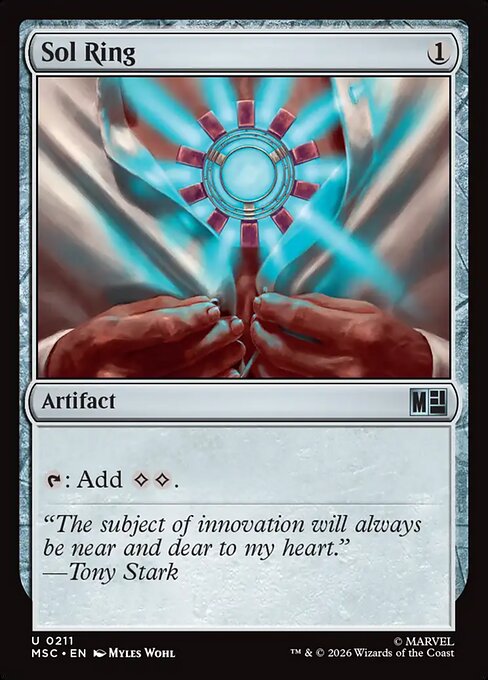
A staple is a card that’s good in almost any deck regardless of strategy. It isn’t a wincon or a combo piece — it’s the connective tissue that makes a 100-card singleton deck function. Because Commander is singleton (one copy of each non-land card), you can’t lean on four copies of your best card. Staples are how you create consistency anyway: every deck runs a Sol Ring, a board wipe, some spot removal (and often a tutor or two to find them), so the average game plays smoothly even though no two decks are identical.
Think of staples as filling five buckets every Commander deck needs:
- Ramp — get ahead on mana so you cast your commander early and often.
- Card draw — refuel so you don’t run out of gas in a long multiplayer game.
- Spot removal — answer the one threat that’s about to kill you.
- Board wipes — reset when three opponents have out-developed you.
- Lands & fixing — the most-skipped category, and the one that quietly loses games.
If you’re brand new to the format, read our step-by-step guide to building a Commander deck first — this post assumes you know the deck skeleton and want to know which cards fill it.
Ramp staples
Ramp is the highest-impact category in the format. Casting a turn-2 mana rock means a turn-3 commander, which means you’re ahead the entire game. These are the ramp staples that go in nearly everything; for a deeper dive (and the full math on how many ramp pieces to run), see our guide to the best ramp cards in MTG.
| Card | Type | Why it’s a staple |
|---|---|---|
| Sol Ring | Artifact | One mana for a rock that taps for two. The best ramp card in the format, full stop — runs in every deck. |
| Arcane Signet | Artifact | Two-mana rock that taps for any color in your commander’s identity. Perfect fixing + ramp. |
| Fellwar Stone / Mind Stone | Artifact | Cheap two-mana rocks; Mind Stone cashes in for a card late when you’re flooded. |
| Cultivate / Kodama’s Reach | Sorcery (green) | Ramp and fix — fetch two basics, one to the battlefield, one to hand. Green’s gold standard. |
| Nature’s Lore / Three Visits | Sorcery (green) | Two mana to grab a Forest (or any dual with the Forest type) untapped. Elite fixing. |
Most decks want 8–12 ramp pieces. Two-color and three-color decks lean on the rocks for fixing; mono-green and green-heavy decks prefer the land-ramp spells because they also fight land destruction and flood.
Card-draw staples
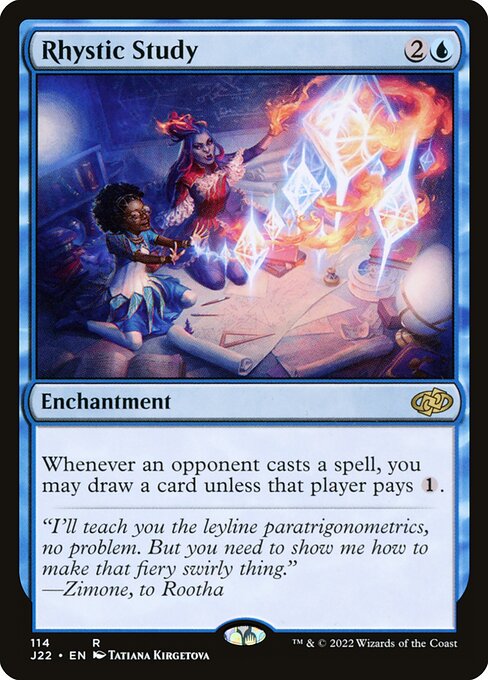
Commander games go long and you have three opponents, so raw card advantage wins games. (For a full color-by-color breakdown, see our best card draw in MTG guide.) The best draw staples are engines — they keep generating cards turn after turn rather than a one-shot draw.
| Card | Colors | Why it’s a staple |
|---|---|---|
| Rhystic Study | Blue | “Do you pay the one?” Taxes the table or buries you in cards. The format-defining draw engine. |
| Mystic Remora | Blue | Absurd early-game draw for one mana; cumulative upkeep means you cash it before it’s a burden. |
| Esper Sentinel | White | White finally got a Rhystic-style tax on a 1/1 body. Premium and pricey, but it’s everywhere. |
| Phyrexian Arena | Black | An extra card every turn for a life — the classic black draw enchantment. |
| Sylvan Library | Green | Card selection + raw advantage; the best green draw enchantment ever printed. |
| Guardian Project / Beast Whisperer | Green | Draw a card whenever a creature enters — engine staples for creature-heavy decks. |
Aim for 8–10 sources of card advantage. Note these aren’t cheap: Rhystic Study and Esper Sentinel run well north of $50 at the time of writing, and Sylvan Library around $30. Budget swaps that punch above their cost include Night’s Whisper, Read the Bones, and the cantrip-heavy blue suite. If you’re building cheap from the ground up, pair these staples with one of the best budget commanders.
Spot-removal staples

You need clean, cheap answers to the threat that’s about to end you — a voltron commander, a combo piece, a problematic artifact. Flexibility matters: cards that hit “any permanent” are worth a premium because you never know what you’ll need to kill.
| Card | Hits | Notes |
|---|---|---|
| Swords to Plowshares / Path to Exile | Creature | One mana, exile. The most efficient creature removal ever — white’s crown jewels. |
| Beast Within / Generous Gift | Any permanent / any nonland | Green and white answers to anything; the downside token rarely matters. |
| Chaos Warp | Any permanent | Red’s only real catch-all removal — exiles to the bottom and dodges indestructible. |
| Anguished Unmaking / Assassin’s Trophy | Any nonland / any permanent | Premium multicolor removal that answers commanders, enchantments, and planeswalkers alike. |
| Go for the Throat / Pongify / Rapid Hybridization | Creature | Cheap mono-color creature kill — efficient gap-fillers in black and blue. |
Run roughly 8–12 pieces of interaction total (spot removal + counters + a couple of wipes). Skimping here is the #1 reason casual decks feel like they “do nothing but durdle.”
Board-wipe staples
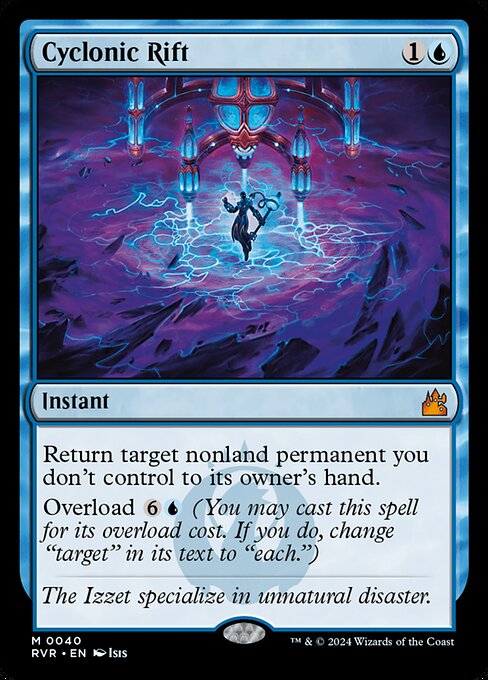
In a four-player game you’ll regularly fall behind on board. A wipe is your reset button. Most decks want 2–4 — enough to dig you out of trouble, not so many you blow up your own board every game.
| Card | Colors | Why it’s a staple |
|---|---|---|
| Wrath of God / Damnation | White / Black | Four-mana “destroy all creatures, no regeneration.” The textbook wipes. |
| Blasphemous Act | Red | Often costs one mana in a developed game; deals 13 to every creature. Premier red wipe. |
| Toxic Deluge | Black | Pay life to set the -X/-X; gets around indestructible and scales to any board. |
| Cyclonic Rift | Blue | Overloaded, it’s a one-sided reset that wins games on the spot — the most-feared instant in the format. |
| Farewell | White | Modular exile of creatures, artifacts, enchantments, and graveyards — the toolbox wipe. |
Protection & utility staples
Once you have a commander or key engine on board, you need to keep it. These cheap cards protect your investment and smooth out your turns.
| Card | Role | Why it’s a staple |
|---|---|---|
| Swiftfoot Boots / Lightning Greaves | Equipment | Hexproof/shroud + haste for your commander — colorless, so they fit any deck. |
| Heroic Intervention | Green | Two mana to give your whole board hexproof + indestructible. Best wipe insurance in green. |
| Counterspell / Swan Song / Arcane Denial | Blue | Hard answers held up at instant speed — stop the combo or the wipe before it resolves. |
Land staples (the category everyone under-builds)

Lands win more games than spells do, because mana screw and color screw lose games on their own. Most Commander decks want around 36–38 lands (lower only with heavy ramp and a low curve). These utility lands cost almost nothing and belong in nearly every deck:
| Land | What it does |
|---|---|
| Command Tower | Taps for any color in your commander’s identity. Near-auto-include in multicolor decks. |
| Exotic Orchard | Taps for any color an opponent’s lands can make — in practice, almost always “any.” |
| Path of Ancestry | Color fixing plus a free scry when you tap for a creature of your commander’s type. |
| Reliquary Tower | No maximum hand size — pairs perfectly with your draw engines. |
| Bojuka Bog / Myriad Landscape | Free graveyard hate and free ramp stapled onto lands you were playing anyway. |
| Rogue’s Passage | Pushes a single attacker through unblocked — a budget finisher in any color. |
Legality check: staples that got banned
Staple lists go stale fast, so keep current. In its September 2024 update, the Commander format banned several long-time “auto-include” staples — most notably Mana Crypt, Jeweled Lotus, and Dockside Extortionist (along with Nadu, Winged Wisdom). If you’re reading an older guide that lists those as must-haves, they’re no longer Commander-legal. Every card in this guide is legal as of June 2026 — always sanity-check against the official banlist before you buy.
How many of each? The staple skeleton
A reliable starting template for a 100-card deck:
- ~37 lands (including the utility lands above)
- 10–12 ramp
- 8–10 card-draw sources
- 8–12 interaction (spot removal + a few counters)
- 2–4 board wipes
- The rest = your commander’s actual game plan (synergy, threats, finishers)
Build to those numbers and your deck will feel consistent regardless of which commander sits at the helm.
Add staples to your deck in seconds
Memorizing forty staples is one thing; assembling them into a balanced 100-card list is another. That’s exactly what our AI Magic: The Gathering deck builder does — tell it your commander and it builds a full, legal decklist with the right ramp, draw, removal, and land counts already dialed in, then you swap in the staples you own. You can also browse community decklists to see how top builders distribute their staples, and check live prices on any card with the card pricing tool before you buy.
Create a free account and brew your next Commander deck with the staples already in place.
Commander staples FAQ
What is the single best Commander staple?
Sol Ring. It’s the most-played card in the entire format because one mana for a rock that taps for two accelerates literally any deck. It’s the closest thing Commander has to an auto-include.
How many staples should a Commander deck run?
Don’t count “staples” directly — count roles. Hit roughly 10–12 ramp, 8–10 card draw, 8–12 interaction, 2–4 wipes, and ~37 lands. Staples are simply the most efficient cards that fill those roles.
Are Commander staples expensive?
Most aren’t. A handful — Rhystic Study, Esper Sentinel (both $50+), and Sylvan Library (~$30) — carry real price tags, but the majority of staples (Sol Ring, Arcane Signet, the land suite, most spot removal) cost a dollar or less. You can build a fully “stapled” deck on a tight budget.
Do staples make every deck feel the same?
No — staples fill the boring jobs (mana, draw, removal) so the fun 40 cards can be 100% about your commander’s strategy. Good staples make your unique cards more consistent, not less unique.
Card images via Scryfall; all card art © Wizards of the Coast. Card availability and prices change — verify against the official Commander banlist and current pricing before purchasing.
Quick tool: Want to check whether your deck has the right number of ramp, removal, and board-wipe pieces? Paste your list into our free MTG Deck Analyzer for an instant breakdown against recommended Commander ratios.
Build your next deck with AI
KrakenTheMeta’s AI deck builder researches the current meta and writes you a complete, format-legal decklist in about a minute — free to try.
Build a Deck with AIor browse community decks



One Comment
Comments are closed.