

Best Lands for Commander: The Ultimate EDH Mana Base Guide (2026)
The mana base is the most overlooked part of a Commander deck — and the part that quietly decides more games than any flashy bomb. You can have the perfect curve and the best commander staples in the format, but if your lands enter tapped, fix the wrong colors, or simply aren’t enough of them, you’ll spend the early turns watching everyone else play Magic. This guide ranks the best lands for Commander — the universal includes, the utility toolbox, and the fixing cycles — answers the question every deckbuilder eventually asks (how many lands should I actually run?), and shows you a full budget mana base for under the price of a single premium dual.
Every price below was checked live against Scryfall in June 2026, and every card is verified Commander-legal. Prices move; the rankings don’t.

How many lands should a Commander deck run?
Run 36–38 lands in a typical 100-card Commander deck. That is the community-tested sweet spot for a deck with an average mana value around 3.0–3.5. From there you adjust based on how much non-land ramp you’re playing:
| Deck profile | Lands | Why |
|---|---|---|
| Low curve + heavy ramp (8+ rocks/dorks, lots of cheap spells) | 34–36 | Mana rocks and dorks act as extra “lands”; you flood if you run too many |
| Average deck (avg mana value ~3.0–3.5) | 36–38 | The default — enough to hit land drops without drowning |
| High curve / big-mana / few rocks | 38–40 | You need to keep hitting drops to cast expensive payoffs |
A useful shortcut: aim for roughly 38 total mana sources — count your lands, plus cheap mana rocks like Arcane Signet and Sol Ring, plus mana dorks and the back faces of modal double-faced cards (MDFCs) that can be played as lands. Every two cheap rocks you add lets you shave about one land. Going below 34 lands is a gamble unless your deck is built around it; above 40 you’ll see too many lands and not enough action. When in doubt for a brand-new build, start at 37 and tune from there. (New to deckbuilding? Start with our step-by-step Commander deck guide.)
The lands that belong in (almost) every deck
A handful of colorless and fixing lands are so universally good that they make the cut in nearly any Commander deck, regardless of colors or strategy. If you own these, put them in.
| Land | ~Price | What it does |
|---|---|---|
| Command Tower | $0.36 | Taps for any color in your commander’s identity. The single best land in the format and an auto-include in every multicolor deck. |
| Path of Ancestry | $0.30 | Command Tower that enters tapped but scries when you cast a creature sharing a type with your commander. Tribal gold. |
| Exotic Orchard | $0.20 | Taps for any color an opponent’s land can make — in a 4-player pod, that’s almost always every color you need. |
| Reflecting Pool | $14.74 | Taps for any color your other lands can produce. Premium fixing for three-plus color decks. |
| Myriad Landscape | $0.27 | Ramp on a land: sacrifice it to fetch two basics of the same type, tapped. Quietly excellent. |
| Reliquary Tower | $3.09 | No maximum hand size. In a format full of card draw, you stop discarding to seven. |
| Command Beacon | $8.27 | Sacrifice it to put your commander into your hand, dodging the command tax. Clutch for expensive generals. |

Best utility lands for Commander
Utility lands are the toolbox: lands that do something beyond making mana. The trick is not overloading on them — every utility land that enters tapped or produces only colorless mana is a small tax on your consistency. Run a focused handful that answer real problems in your meta. These are the best, ranked by how widely useful they are. Note that most of them — Urborg, Boseiju, Nykthos, the channel lands — are legendary, which only matters if you copy one with Vesuva or Thespian’s Stage; see our legend rule guide for what happens then. The cheapest consistency upgrade in this category is the cycling lands — 50 of them are Commander-legal, most cost under 40 cents, and they turn a late-game flood draw into a fresh card.
| Land | ~Price | Role |
|---|---|---|
| Bojuka Bog | $1.04 | Exiles a target graveyard on entry — free, repeatable graveyard hate against reanimator and aristocrats. |
| Rogue’s Passage | $0.38 | Makes a creature unblockable. The cheapest way to push through commander damage or a lethal swing. |
| Ghost Quarter | $0.96 | Budget land disruption — blow up any land (including their game-warping nonbasic). Strip Mine and Wasteland do it harder for more money. |
| War Room | $2.70 | Pay life to draw a card. Colorless card advantage stapled to a land any deck can run. |
| Bonders’ Enclave | $0.70 | Card draw for green/creature decks — only fires when you control a power-4 creature, but cheap and repeatable. |
| Maze of Ith | $10.73 | Untap and fog one attacker every combat. Premier defensive land for slower, controlling decks. |
| Homeward Path | $15.15 | Returns all creatures to their owners — the answer to Control Magic effects and group-hug theft commanders. |
| Boseiju, Who Endures | $49.97 | A Forest that channels into instant-speed artifact/enchantment/nonbasic removal. Best green utility land in the game. |
| Otawara, Soaring City | $27.49 | The blue equivalent — an Island that channels to bounce almost anything. Free interaction that never clogs your mana. |
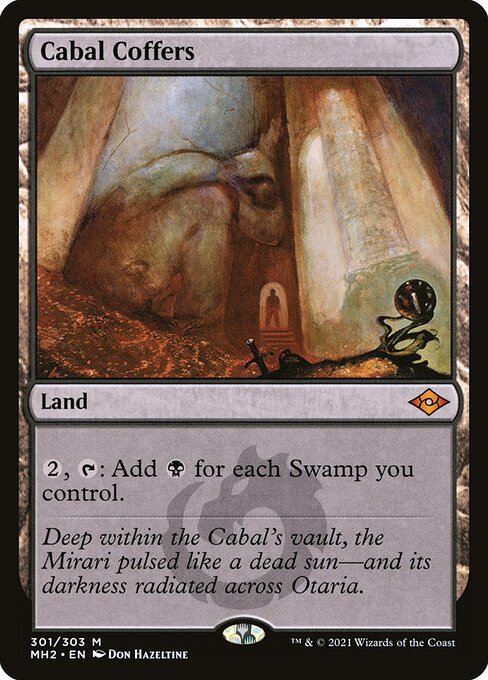
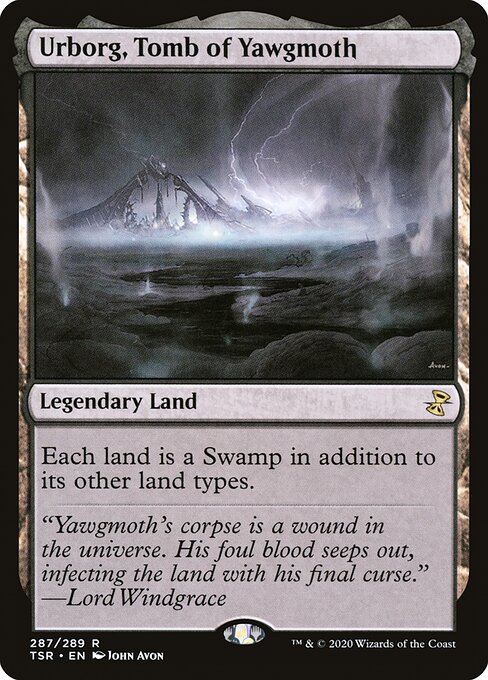
Two mono-color powerhouses deserve their own mention. Cabal Coffers (~$33.11) plus Urborg, Tomb of Yawgmoth (~$62.91) is the iconic mono-black ramp engine — Urborg turns every land into a Swamp, and Coffers then taps for one black per Swamp you control, snowballing into absurd mana. Green’s answer is Nykthos, Shrine to Nyx (~$51.95), which converts a heavy devotion board into explosive mana, and Yavimaya, Cradle of Growth (~$14.97), which makes every land a Forest. Ancient Tomb (~$136.23) is the format’s premier fast-mana land — two colorless for two damage — and a cornerstone of higher-power and cEDH builds.
Best fixing lands: the cycles, ranked
If your deck plays two or more colors, color fixing is what keeps your mana base honest. Nonbasic lands that make multiple colors come in tiers — here’s how the major cycles rank, from premium to budget. You almost never need the top tier to have a great deck; you just need enough untapped fixing.
- Fetch lands (e.g. Misty Rainforest, Polluted Delta) — pay 1 life, search a dual or basic. The gold standard: they fix perfectly, thin your deck, and enable landfall. The most expensive tier.
- Original dual lands (the “ABUR” duals like Bayou, Tundra) — two colors, untapped, no drawback, but Reserved List and very pricey. The best mana, the worst price.
- Shock lands (e.g. Godless Shrine, ~$8.76) — pay 2 life to enter untapped, and they carry both basic land types so fetches can grab them. The best buyable fixing. Worth noting: all ten shock lands are being reprinted in the Star Trek set on November 13, 2026 — expect prices to soften, so if you can wait, wait.
- Triomes (three-color tap lands, e.g. Indatha Triome ~$19.75) — enter tapped but fix three colors and have basic types. Backbone of three-plus color decks; cheaper reprints exist.
- Check / Pain / Slow / Scry lands — the budget heroes. Sunpetal Grove (~$0.47, check), Llanowar Wastes (~$0.49, pain), and Temple of Malady (~$0.23, scry) all fix two colors for well under a dollar.
- Generic fetchers — Fabled Passage (~$1.60), Terramorphic Expanse (~$0.39), and Evolving Wilds grab a basic of any type. Slow, but they fix any color in any deck for pocket change.
Want the full breakdown of two- and three-color fixing? We have dedicated explainers on dual lands, the complete dual lands list, and tri-lands. And because land prices swing wildly between printings, check the live value of anything before you buy with our card pricing tool.
A complete budget mana base under $15
Here’s the best news in this entire guide: you do not need a single expensive land to build a consistent two-color mana base. Every land below is under a dollar, and together they fix, ramp, and provide utility. Pad the rest of your 37-land count with basics in your two colors.
| Land | ~Price | Job |
|---|---|---|
| Command Tower | $0.36 | Any-color fixing |
| Exotic Orchard | $0.20 | Any-color fixing (pod-dependent) |
| Path of Ancestry | $0.30 | Fixing + scry |
| Sunpetal Grove (or your colors’ check land) | $0.47 | Untapped two-color |
| Llanowar Wastes (or your colors’ pain land) | $0.49 | Untapped two-color |
| Temple of Malady (or your colors’ scry temple) | $0.23 | Two-color + scry |
| Terramorphic Expanse + Evolving Wilds | ~$0.40 + bulk | Fetch a basic of any color |
| Myriad Landscape | $0.27 | Ramp |
| Bojuka Bog | $1.04 | Graveyard hate |
| Rogue’s Passage | $0.38 | Evasion / win condition |
| Ash Barrens | $0.36 | Fixing or untapped basic |
| Bonders’ Enclave | $0.70 | Card draw |
| Ghost Quarter | $0.96 | Land disruption |
That’s a full utility-and-fixing suite for well under $15. Lands are also the easiest place to upgrade later — swap budget tap lands for shocks and fetches one at a time as your budget allows, without rebuilding anything else.
Common mana base mistakes
Building an all-nonbasic mana base with no basics to fall back on. Almost every recommendation on this page is a nonbasic land, and that is correct right up until someone resolves Blood Moon or Back to Basics — two cheap, common enchantments that turn every nonbasic into a Mountain or stop it untapping entirely. A greedy five-colour base can be switched off by a single three-mana card. Keeping a handful of basics, and knowing which decks are likely to punish you, is the cheap insurance. Our guide to stax and resource denial covers what those cards do and how often you should expect to see them.
- Too few lands. The number-one reason decks stumble. Cutting below 34 lands to fit more spells feels clever and loses games. Hit your land drops.
- Too many tapped lands. The quiet killer. A turn spent playing a tapped land is a turn you fell behind. Cap your tapped lands and prioritize untapped fixing — being a turn slow on a four-player table compounds fast.
- No real fixing in three-plus colors. If half your spells are stuck in hand because you can’t make the right color, you’re not playing the game. Fixing lands are not optional in Jeskai, Mardu, or five-color.
- Zero utility lands. The opposite mistake — running 37 lands that all just tap for mana. A few of the utility lands above add huge value for almost no consistency cost.
- Forgetting to count non-land mana. If you run Sol Ring, Arcane Signet, and eight dorks, you can safely shave a land or two. Count your total sources, not just lands. Lands are only part of your ramp — see our guide to the best ramp cards in MTG for the rest.
Your mana base can push your deck out of its bracket
This is the newest mana base mistake, and the one most likely to catch you out in 2026. Under the official Commander bracket system, a deck’s power level is set partly by how many cards it plays from Wizards’ Game Changers list — and seven of the 53 Game Changers are lands. Brackets 1 and 2 allow none of them. Bracket 3 allows up to three.
| Land | Why it is a Game Changer | Cheapest print |
|---|---|---|
| The Tabernacle at Pendrell Vale | Taxes every creature on the board every upkeep | $3,069.50 |
| Mishra’s Workshop | Three mana on turn one for artifacts | $3,000.97 |
| Gaea’s Cradle | Scales with a green board to absurd mana | $1,662.92 |
| Serra’s Sanctum | The enchantment version of Cradle | $501.40 |
| Ancient Tomb | Two mana from one land for two life | $123.23 |
| Field of the Dead | Builds an unbounded Zombie army from land drops | $27.41 |
| Glacial Chasm | Complete damage prevention, the backbone of several stax locks | $18.44 |
The trap is the cheap end of that list, not the expensive end. Nobody accidentally puts a $3,000 Tabernacle in a casual deck. But Glacial Chasm at $18.44 and Field of the Dead at $27.41 are ordinary-looking utility lands at ordinary-looking prices, and either one on its own makes a deck ineligible for Bracket 2. If you have built a precon upgrade and told your table it is a Bracket 2 deck, a single Field of the Dead makes that untrue.
The other bracket rule your mana base can break is mass land denial, which is restricted above Bracket 3 — Armageddon, Ravages of War and Jokulhaups effects are the ones to watch. Neither restriction has anything to do with how expensive your lands are, which is the whole point of the system: it measures what your deck does, not what it costs. Our deck analyzer checks a list against the Game Changers roster automatically if you would rather not cross-reference 53 cards by hand.
Frequently asked questions
How many lands should a Commander deck have?
Most decks want 36–38 lands. Run 34–36 if you have a low curve and lots of mana rocks and dorks; run 38–40 if your deck is expensive and ramp-light. Aim for roughly 38 total mana sources counting lands plus cheap rocks and dorks.
What is the best land in Commander?
Command Tower. It costs about $0.36, enters untapped, and taps for any color in your commander’s identity — it belongs in essentially every multicolor deck in the format.
How many tapped lands is too many?
There’s no hard cap, but every tapped land slows you down a turn. In a faster meta, keep your always-tapped lands to a small handful and lean on untapped fixing (shocks, check lands, pain lands). Tapped triomes and scry temples are fine in slower, three-plus-color decks. All ten Temples scry 1 as they enter, and the full cycle costs under $2.00 at cheapest printings — our guide to scry covers what that scry is actually worth on turn one.
Do I need fetch lands and dual lands to play Commander?
No. Fetches and original duals are the best fixing money can buy, but a deck of check lands, pain lands, scry temples, and basics plays nearly as consistently for a fraction of the price. Buy the expensive fixing only once you’re sure of the deck.
What are the best budget lands for Commander?
Command Tower, Exotic Orchard, Path of Ancestry, Myriad Landscape, Terramorphic Expanse, Bojuka Bog, Rogue’s Passage, Ash Barrens, and Bonders’ Enclave are all under about a dollar and make almost any deck better.
Build and test your mana base
A great mana base is not just about fixing and ramp — it can be a win condition. Decks built around landfall turn every land you play into tokens, damage, or card draw. If you want your lands to do more than tap for mana, see our best landfall cards and Commander deck guide.
The fastest way to get a mana base right is to see it in action. KrakenTheMeta’s AI deck builder builds you a full 100-card Commander list — lands included — around any commander, and our MTG Deck Analyzer will flag a shaky mana base, an off-color land, or a curve that wants more sources before you ever sleeve up. Browse hundreds of community-built decks for mana base inspiration in the public deck gallery, and check live prices on any land with our card pricing tool.
Get the lands right and everything else in your deck starts working. Sign up free and build your next Commander deck the easy way.
Build your next deck with AI
KrakenTheMeta’s AI deck builder researches the current meta and writes you a complete, format-legal decklist in about a minute — free to try.
Build a Deck with AIor browse community decks

5 Comments
Comments are closed.