
Best Mill Cards in MTG + How to Build a Mill Deck (2026)
Mill is one of the most beloved — and most misunderstood — ways to win a game of Magic. Instead of dealing damage, you attack your opponent’s library, forcing cards into their graveyard until they have nothing left to draw. This is the definitive guide to the best mill cards in MTG: the finishers, the engines, the commanders, how to actually build a mill deck, and the rules traps that cost beginners games. Every card below has been verified live on Scryfall for Commander legality and cheapest current printing.
What is mill in MTG (and how does it actually work)?
To mill a card is to put the top card of a library into its owner’s graveyard. “Mill” became official keyword terminology in 2021 — older cards use the wordier phrase “puts the top cards of their library into their graveyard,” but it means exactly the same thing. A mill deck’s game plan is simple: empty the opponent’s library faster than they can draw through it.
Here is the single most important rule, and the one nearly every new player gets wrong:
- An empty library does not lose you the game. Trying to draw from an empty library does. Milling your opponent’s last card doesn’t end the game on the spot — they lose the next time they’re required to draw (usually their next draw step). So the “kill turn” for mill is almost always your opponent’s upkeep, not the moment their library hits zero.
- Mill isn’t damage. It ignores life totals, lifegain, fog effects, and combat entirely. A player at 200 life with an empty library is dead the moment they draw.
- Mill fills a graveyard — theirs. That’s usually irrelevant, but against reanimator, dredge, or delve decks it actively helps them. More on that trap below.
New to Commander in general? Start with our step-by-step guide to building a Commander deck, then come back to build the most feared library in the pod.
The best mill cards in MTG, by role
Good mill decks aren’t just a pile of “mill X” spells. You want a mix of one-shot finishers, repeatable engines that grind every turn, and a couple of payoffs that punish a full graveyard. Here are the best in each role, cheapest printing verified on Scryfall.
Mass-mill finishers
These are your haymakers — big chunks of library gone in a single card. In two-player formats one or two of these plus an engine closes the game; in Commander they’re at their best doubled (see Bruvac below).
| Card | Cost | What it does | ~Price |
|---|---|---|---|
| Glimpse the Unthinkable | {U}{B} | Target player mills 10 — the iconic two-mana mill spell | $2.99 |
| Traumatize | {3}{U}{U} | Mills half a library, rounded down | $2.07 |
| Maddening Cacophony | {1}{U} | Each opponent mills 8; kicked for {3}{U}, mills half each library rounded up | $6.77 |
| Fractured Sanity | {U}{U}{U} | Each opponent mills 14; cycles when you can’t afford it | $2.30 |
| Tasha’s Hideous Laughter | {1}{U}{U} | Exiles cards until total mana value 20+ — hits 20-30 cards in most decks | $3.79 |
| Mind Grind | {X}{U}{B} | Mills until X lands are revealed — scales into the late game | $4.10 |
| Increasing Confusion | {X}{U} | Mills X; cast from the graveyard, mills 2X (flashback) | $0.87 |
| Startled Awake | {2}{U}{U} | Mills 13, then recurs from the graveyard as a 4-power attacker | $0.77 |
| Drown in Dreams | {X}{2}{U} | Mills 2X; if you have a commander, also draw X — built for EDH | $0.69 |
Repeatable mill engines
Engines are the backbone of a mill deck. One finisher is a hiccup; a resolved engine left on the board grinds a library to dust over a few turns. The two-mana “draw-matters” enchantments are the heart of it — every card you draw becomes damage to their library.
| Card | Cost | Engine | ~Price |
|---|---|---|---|
| Sphinx’s Tutelage | {2}{U} | On each of your draws, an opponent mills 2 — and chains if two milled nonlands share a color | $1.68 |
| Psychic Corrosion | {2}{U} | On each of your draws, each opponent mills 2 — the multiplayer upgrade | $4.92 |
| Teferi’s Tutelage | {2}{U} | On each of your draws, target opponent mills 2 — the 31-cent budget version | $0.31 |
| Fraying Sanity | {2}{U} | Doubles a chosen player’s mill each turn — a cheap stand-in for Bruvac | $0.51 |
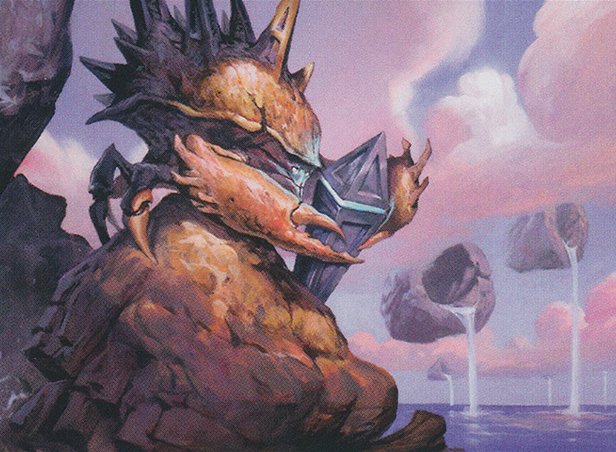
| Hedron Crab | {U} | Landfall: target player mills 3 — a one-mana engine that fires on every land | $2.68 |
| Ruin Crab | {U} | Landfall: each opponent mills 3 — the multiplayer Crab | $0.90 |
| Manic Scribe | {1}{U} | Mills 3 on entry, then 3 more each opponent’s upkeep with delirium | $0.34 |
| Mesmeric Orb | {2} | Every permanent that untaps mills a card — enormous, but symmetric (see traps) | $15.89 |
| Altar of the Brood | {1} | Each opponent mills 1 whenever a permanent enters under your control — a combo enabler | $8.29 |
Mill payoffs and combos
These cards turn a stocked opponent graveyard into a win, or end the game outright:
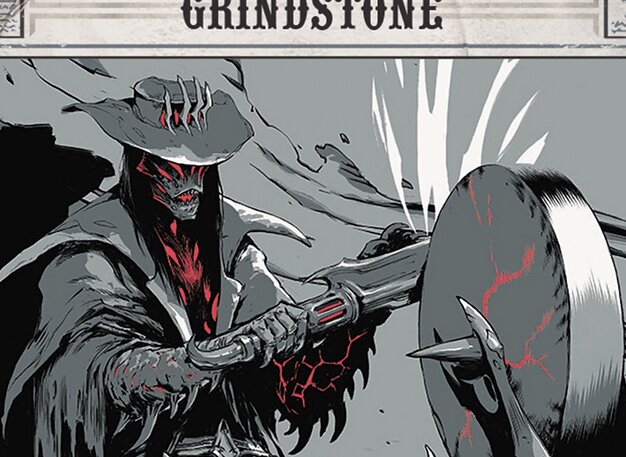
- Grindstone ({1}, ~$3.34) + Painter’s Servant ({2}, ~$32.48) — the classic two-card combo. Painter’s Servant names a color and makes every card that color; Grindstone mills 2 and “repeats if two share a color,” so it never stops — it decks an opponent in a single activation. Both are legal in Commander.
- Duskmantle Guildmage ({U}{B}, ~$0.80) — while its first ability is active, every card that hits an opponent’s graveyard drains them 1 life. Turns a mass mill into a lethal life-loss finisher, sidestepping the “they don’t lose until they draw” problem entirely.
- Consuming Aberration ({3}{U}{B}, ~$0.23) — a creature as big as your opponents’ graveyards combined, that mills them further every time you cast a spell. A beater and an engine in one.
- Undead Alchemist ({3}{U}, ~$0.79) — converts Zombie combat damage into mill and turns milled creatures into more Zombies. The engine of tribal Zombie-mill.
- Wight of Precinct Six ({1}{B}, ~$0.13) — grows with every creature card in your opponents’ graveyards; a cheap, fast clock that mill fuels.
- Archive Trap ({3}{U}{U}, ~$1.14) — mills 13, and costs {0} if that opponent searched their library this turn. A fetchland- and tutor-heavy pod makes it free; a deck that never searches makes it a five-mana brick. Situational, but backbreaking when it lands free.
The best mill commanders

Almost every dedicated mill deck lives in blue-black (Dimir). Here are the commanders that anchor the archetype:
| Commander | Colors | Why build it | ~Price |
|---|---|---|---|
| Phenax, God of Deception | {U}{B} | Every creature you control taps to mill equal to its toughness — big-butt creatures become mill cannons | $15.74 |
| Bruvac the Grandiloquent | {U} | Doubles all mill your opponents take. Traumatize now mills their whole deck. The payoff that makes EDH mill real | $43.24 |
| Anowon, the Ruin Thief | {U}{B} | Rogue tribal: combat damage mills and draws you cards — mill plus a real board | $1.16 |
| Szadek, Lord of Secrets | {U}{B} | His combat damage mills that many and grows him — a self-contained evasive win | $0.21 |
| Lazav, Dimir Mastermind | {U}{B} | Copies the best creature milled into any graveyard — a value shell that loves a full yard | $0.69 |
Bruvac is often run in the 99 of a Phenax deck rather than as the commander himself — the doubling stacks with everything. If you want to pilot mill as a commander on a budget, Szadek and Anowon are both under a couple of dollars.
How to build a mill deck (the Commander blueprint)
A mill deck is a control deck with an alternate wincon. The rough shape of a 100-card Dimir mill build:
- ~37 lands plus your ramp — a slightly higher count if you lean on landfall Crabs. See our Commander mana base guide for the fixing.
- 6-10 mill engines and finishers — the cards above. Prioritize the “each opponent” ones (Ruin Crab, Psychic Corrosion, Maddening Cacophony) in a multiplayer pod.
- 10-12 pieces of interaction — mill is slow, so you must survive. Load up on removal and counterspells to protect your engines, plus a couple of board wipes to reset aggressive boards while you grind.
- Card draw — your draw engines are your damage with Tutelage effects out. Blue’s best draw doubles as your win condition; see our best card draw in MTG guide.
- 1-2 payoffs — Duskmantle Guildmage or Bruvac to convert the grind into an actual kill.
Want the software to do the heavy lifting? Our AI deck builder will draft a full Dimir mill list around Phenax or Bruvac in seconds, and the deck analyzer will flag whether you’ve got enough engines to actually close.
Self-mill vs. opponent-mill: two different strategies
Confusingly, “mill” describes two opposite game plans. Everything above is opponent-mill — you’re the aggressor, decking the other players out. Self-mill is a fuel strategy: you mill yourself to stock your graveyard for reanimator, dredge, delve, or delirium payoffs. Cards like Stitcher’s Supplier ({B}, ~$0.30, mills you 3 on entry and death) are self-mill enablers, not win conditions. Don’t mix the two intents up when you’re deckbuilding — and be careful pointing opponent-mill at a graveyard deck, because you’re doing their self-mill for them.
Mill’s biggest weakness (the honest truth)
Here’s what the listicles won’t tell you: mill is a trap as a primary win condition in multiplayer Commander. A four-player pod means three 99-card libraries — roughly 297 cards you have to grind through, while three opponents attack your life total and your engines. The math rarely works before someone kills you.
Mill is strongest when you respect that math:
- In 1v1 formats (Modern, Pauper, Duel Commander) mill is a genuine, tuned archetype — one library, no doubling required.
- In multiplayer EDH, either run Bruvac / Fraying Sanity to double the math, lean on “each opponent” symmetric mass-mill, or treat mill as a secondary wincon behind a real board (Anowon, Szadek). Pure single-target mill in a pod is a losing plan.
- Always read the table. Never mill a reanimator or dredge player — you’re filling their graveyard for free.
Common mill mistakes and rules traps
- Waiting for the library to hit zero. It’s not the empty library that wins — it’s the failed draw. Hold up interaction so they can’t refill (a fresh land, a “shuffle in” effect) before their draw step.
- Mesmeric Orb is symmetric. It mills you on every untap too. Great in a self-mill shell or when you have far more library to spare; a liability if you’re the one running low.
- Traumatize rounds down; kicked Maddening Cacophony rounds up. On a 40-card remaining library that’s a 20 vs 20 wash, but on odd numbers it matters — know which finisher clears the last cards.
- Archive Trap is conditional. Its free cast needs an opponent to have searched their library that turn. It’s a house against fetch/tutor decks and dead weight against decks that don’t search.
- Milling a card is not the same as putting it in exile. Tasha’s Hideous Laughter exiles — which dodges “if a card would go to the graveyard” shenanigans, but also can’t be Duskmantle-drained. Read the finisher.
Budget mill core (under $15)
Mill is one of the cheapest archetypes to assemble — most of the best cards are commons and uncommons. A functional core: Teferi’s Tutelage ($0.31), Fraying Sanity ($0.51), Ruin Crab ($0.90), Manic Scribe ($0.34), Increasing Confusion ($0.87), Startled Awake ($0.77), Drown in Dreams ($0.69), Szadek as commander ($0.21), Consuming Aberration ($0.23), Wight of Precinct Six ($0.13), Duskmantle Guildmage ($0.80). That’s the entire mill spine for well under $15 before lands. Check live prices on our card pricing tool before you buy — mill staples reprint often and swing in price.
Frequently asked questions
Does milling someone’s last card make them lose?
No — not immediately. A player only loses when they attempt to draw from an empty library. Mill their last card and they lose on their next draw step (or the next time an effect makes them draw). Milling itself is never a state-based loss.
What colors are best for mill?
Blue is the core — it owns the mill engines and finishers. Blue-black (Dimir) adds Duskmantle Guildmage-style life-loss payoffs and the best mill commanders (Phenax, Anowon, Szadek, Lazav). You can splash green for landfall/ramp Crab shells, but Dimir is the home.
Is mill good in Commander?
It can be, but it’s a trap if you build it naively. One opponent is 99 cards; a full pod is ~297. Use doublers (Bruvac, Fraying Sanity), “each opponent” mass-mill, or run mill as a secondary wincon behind a real board. Pure single-target mill in a four-player game usually loses to the clock.
What’s the best budget mill card?
Teferi’s Tutelage (~$0.31) and Fraying Sanity (~$0.51) are the best value — a repeatable engine and a mill-doubler for under a dollar combined. Szadek, Lord of Secrets (~$0.21) is the cheapest genuinely strong mill commander.
What is the Grindstone combo?
Grindstone plus Painter’s Servant. Painter’s Servant makes every card a single color; Grindstone mills two and repeats whenever two milled cards share a color — so with Painter out, it never stops and decks the target in one activation. Both cards are Commander-legal.
Ready to build the most feared library-eater in your playgroup? Generate a mill deck with KrakenTheMeta’s AI builder, browse community Dimir decklists, or sign up free to save and tune your own.
Build your next deck with AI
KrakenTheMeta’s AI deck builder researches the current meta and writes you a complete, format-legal decklist in about a minute — free to try.
Build a Deck with AIor browse community decks



One Comment
Comments are closed.