Best Enchantments in MTG + How to Build an Enchantment Deck (2026)
Enchantments are quietly one of the most powerful — and most resilient — card types in Magic: The Gathering. They sit on the battlefield doing their job turn after turn, and here’s the part most players underrate: almost nobody runs enough enchantment removal to stop them. Build around them with the right “enchantress” engines and your deck snowballs into a wall of card advantage that opponents simply can’t answer. This guide covers the best enchantments in MTG, the best enchantment commanders, and a full blueprint for how to build an enchantment (enchantress) deck in Commander in 2026 — every card below verified on Scryfall as Commander-legal, with current prices.
Why enchantments are so strong in Commander
Two reasons. First, resilience: the average Commander deck is loaded with creature removal and artifact removal, but dedicated enchantment removal (Back to Nature, Calming Verse, Return to Dust) is rare. An enchantment that resolves usually stays resolved. Second, compounding value: the “enchantress” package turns every enchantment you play into a card, so your engine literally pays for itself. Play an enchantment, draw a card, play the next one. That’s the whole archetype in one sentence — and it’s why enchantress is one of the most beginner-friendly value strategies in the format.
The one nuance that separates good enchantress players from bad ones: three trigger types
This is where most “best enchantments” lists get sloppy. Enchantment payoffs do not all trigger the same way, and mixing them up quietly wrecks your deck:
- Cast triggers — “whenever you cast an enchantment spell.” Argothian Enchantress, Enchantress’s Presence, Verduran Enchantress, Mesa Enchantress, Satyr Enchanter, Sythis, and Sigil of the Empty Throne all fire off the cast. They see the spell on the stack — but they do not trigger off tokens, copies, or enchantments you reanimate, because those were never “cast.”
- Constellation (enters-the-battlefield) triggers — “whenever an enchantment you control enters.” Eidolon of Blossoms, Setessan Champion, Archon of Sun’s Grace, and Doomwake Giant fire when any enchantment enters — including tokens, copies, blinked permanents, and anything you return from the graveyard. Much broader.
- Per-turn triggers — Tuvasa the Sunlit draws only off your first enchantment each turn.
The practical takeaway: if your deck leans on tokens and reanimation (Estrid, Anikthea, Starfield of Nyx), you want constellation payoffs — the cast-enchantresses will sit there doing nothing while your Aura tokens and reanimated enchantments enter. If you’re a straightforward “cast a lot of enchantments” build, the cast-enchantresses are your best draw. Match your payoffs to your plan.
Best enchantress engines (the draw payoffs)
These are the heart of the deck — the cards that convert enchantments into cards, mana, or bodies. Run 6–10 of them so you almost always have one online.
| Card | Color | What it does | ~Price |
|---|---|---|---|
| Enchantress’s Presence | G | Cast trigger: draw a card for each enchantment spell. The budget all-star — no downside. | $1.70 |
| Argothian Enchantress | G | Same draw, on a body with shroud (nearly unkillable). The premium version. | $66 |
| Sythis, Harvest’s Hand | GW | Cast trigger: gain 1 life and draw. Also a fantastic commander (see below). | $4.50 |
| Eidolon of Blossoms | G | Constellation: draws when any enchantment enters — the go-to for token/reanimator builds. | $3.50 |
| Setessan Champion | G | Constellation: draw and a +1/+1 counter each time. Grows into a threat. | $5.40 |
| Sanctum Weaver | G | Taps for mana equal to your enchantment count — the archetype’s ramp engine. | $4.50 |
| Verduran / Mesa Enchantress, Satyr Enchanter | G / W / GW | The rest of the cast-trigger “enchantress” family. Redundancy is the point. | $0.90–$3.90 |
| Kor Spiritdancer | W | Draws off Aura casts and grows +2/+2 per Aura — the Aura-voltron engine. | $0.40 |
Best value & staple enchantments in MTG
These are the “best enchantments” that belong in almost any deck running their colors — enchantress or not. They’re the reason the type is so respected.
| Card | Color | Why it’s elite | ~Price |
|---|---|---|---|
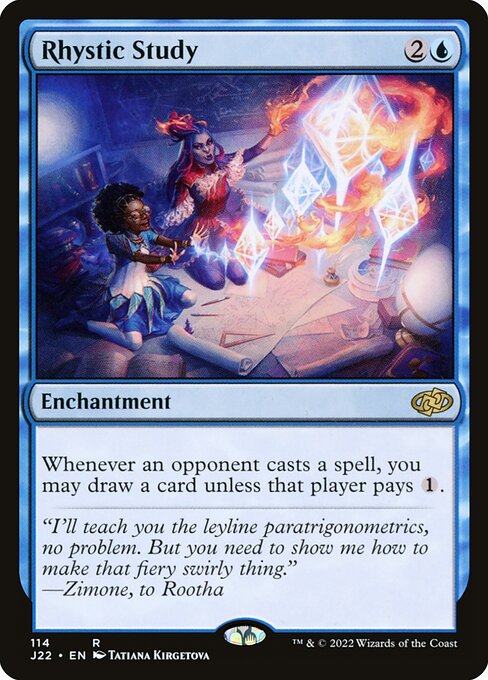
| Rhystic Study | U | Draw a card whenever an opponent casts a spell (unless they pay 1). The most-hated enchantment in the format for a reason. | $73 |
| Smothering Tithe | W | A Treasure every time an opponent draws (unless they pay 2). Explosive ramp. | $62 |
| Mystic Remora | U | Cheap early-game card firehose — but see the honesty note below; it’s temporary by design. | $13 |
| Sylvan Library | G | Card selection + raw advantage. A staple in every green value deck. | $30 |
| Phyrexian Arena / Necropotence | B | Black’s premier “pay life for cards” enchantments. | $4 / $38 |
| Ghostly Prison / Propaganda | W / U | Pillowfort staples — tax attackers so your slow engine has time to win. | $5 / $2 |
| Sterling Grove | GW | Gives your other enchantments shroud and tutors an enchantment to the top of your library. | $3.90 |
| Doubling Season | G | Doubles tokens and counters — a payoff bomb in token-heavy enchantress builds. | $32 |
Rounding out the tier: Land Tax (~$13), Mirari’s Wake (~$6), Privileged Position (~$5), and Luminarch Ascension (~$13). If you’re pricing a build, our card price tool pulls current numbers on all of these.
Enchantment win conditions
An enchantress deck can grind forever, but it still needs to actually close. These are the payoffs that turn a pile of enchantments into a lethal board.

- Sigil of the Empty Throne ($0.60) — a 4/4 flying Angel every time you cast an enchantment. Ends games fast in a dense build.
- Archon of Sun’s Grace ($0.30) — constellation 2/2 flying lifelink Pegasus tokens; a cheap, resilient token wincon.
- Luminarch Ascension ($13) — 4/4 Angels on demand once it’s online. Beloved and hated.
- Starfield of Nyx ($14) — turns your non-Aura enchantments into creatures (with 5+ enchantments) and reanimates them. A wincon and a liability — read the honesty note.
- Doomwake Giant ($0.60) — constellation -1/-1 to all opponents’ creatures; doubles as a one-sided board wipe in a dense deck.
Best enchantment commanders
The “enchantment commander” / “enchantress commander” archetype is one of the most popular value strategies in EDH. Here are the best options by color identity and playstyle:
| Commander | Colors | Best for | ~Price |
|---|---|---|---|
| Sythis, Harvest’s Hand | Selesnya (GW) | The beginner pick. Cheap, low-maintenance, draws + gains life off every enchantment cast. | $4.50 |
| Tuvasa the Sunlit | Bant (GWU) | A growing voltron threat that also draws; adds blue for Rhystic Study & counters. | $4.30 |
| Anikthea, Hand of Erebos | Abzan (WBG) | Graveyard enchantress — copies non-Aura enchantments as 3/3 Zombies. Constellation heaven. | $6.70 |
| Estrid, the Masked | Bant (GWU) | Planeswalker commander that makes Aura tokens (constellation food) and mass-reanimates enchantments. | $1.10 |
| Calix, Guided by Fate | Selesnya (GW) | Copies your enchantments and tutors them from your deck — pure enchantment synergy. | $14 |
| Go-Shintai of Life’s Origin | 5-color | The Shrine sub-archetype — recurs Shrines and enchantments from the yard. | $8.80 |
One honest note: Sisay, Weatherlight Captain ($2.70) shows up in “enchantment” searches, but she’s really a legendary-permanents commander who happens to fetch enchantments — great, but not a pure enchantress. Pick your commander to match how you actually want to play. Want the engine to build itself? Feed your commander into our AI deck builder and it will draft a full 99 around it in seconds.
How to build an enchantment (enchantress) deck
Here’s the blueprint that makes the archetype hum. Rough ratios for a 100-card Commander deck:
- ~28–34 enchantments — high density is what keeps constellation and cast triggers firing. This is the single most important number.
- 6–10 enchantress engines — the draw/ramp payoffs from the table above. Redundancy means you rebuild fast after a wipe.
- 8–10 ramp sources — lean on enchantment ramp (Sanctum Weaver, Utopia Sprawl, Wild Growth) so your ramp also triggers your enchantresses.
- 6–8 interaction pieces — enchantment-based removal where possible (Grasp of Fate, Song of the Dryads, Oblivion Ring) so removal triggers constellation too.
- 2–3 win conditions — Sigil, Archon, Luminarch, Starfield.
- ~36–38 lands, trimmed slightly for your ramp package. For deep help on mana bases, see our EDH mana base guide.
The gameplan is simple: deploy an enchantress, start chaining enchantments, out-draw the table, and close with tokens or a Starfield swing. Because so little of the table’s removal can touch enchantments, you’re often the most resilient deck at the table by turn six. Want to sanity-check your list’s curve and consistency? Run it through our MTG deck analyzer.
Auras: the double-edged sword
Auras are enchantments, so they trigger constellation and Kor Spiritdancer — but they carry a real risk most beginners learn the hard way. When you enchant a creature with an Aura and that creature is removed, you lose both cards. That’s a two-for-one blowout, and in a format full of removal it can be backbreaking.
How to mitigate it:
- Enchant hexproof/shroud creatures — Kor Spiritdancer, Slippery Bogle, or a creature wearing Swiftfoot Boots.
- Use totem/umbra armor — Auras that keep the creature alive when it “dies.”
- Go fast and cheap — Ethereal Armor ($0.40), All That Glitters ($0.60), Daybreak Coronet ($4.70) plus Setessan Training ($0.30) can kill before removal matters. Sram, Senior Edificer ($0.55) draws off every Aura you cast.
Aura-voltron is a legitimate, cheap way into the archetype — just respect the two-for-one math. (For a fuller voltron treatment, see our Commander equipment & voltron guide — Equipment sidesteps the two-for-one because it stays on the battlefield when the creature dies.)
Constellation vs. Enchantress: what’s the difference?
Both reward you for enchantments, but they trigger differently, and knowing which is which lets you build correctly. Constellation is a keyword from the Theros block that triggers whenever any enchantment enters the battlefield under your control — tokens and copies included. Classic “enchantment matters” cards like Eidolon of Blossoms, Setessan Champion, and Archon of Sun’s Grace use it. Enchantress effects (Argothian Enchantress, Enchantress’s Presence) trigger on the cast instead, so they miss tokens and reanimation but can’t be blanked by a permanent that never technically “enters” via casting. A strong deck runs both, weighted toward whichever matches its plan.
The honest weaknesses (and common mistakes)
Enchantments are resilient, not invincible. Know these before you build:
- Dedicated enchantment sweepers wreck you. The archetype’s whole edge is that few decks run enchantment hate — but the moment someone casts Back to Nature, Calming Verse, or Farewell (exiling enchantments), your board evaporates all at once. Diversify your win conditions and hold up a little protection.
- Starfield of Nyx is a trap against wipes. Once it makes your enchantments into creatures, a board wipe now kills your enchantments too. Deploy it to win, not to durdle.
- Solitary Confinement turns off your own draws. It’s a near-unbeatable pillowfort lock — but it makes you skip your draw step and discard each turn. Only run it with an enchantress engine or Sensei’s Divining Top to refill.
- Mystic Remora is temporary. Its cumulative upkeep gets brutal fast — cash in the cards over 2–4 turns, then let it go. Keeping it too long is a classic beginner misplay.
- Underworld Breach is an enchantment by type, not an enchantress card. It’s a combo/storm piece. Don’t jam it just because it shares a type line — type ≠ archetype fit.
Budget enchantment core (under ~$15 total)
You can start an enchantress deck for almost nothing — the engine’s power doesn’t scale with price. A starter core: Enchantress’s Presence ($1.70), Mesa Enchantress ($0.90), Satyr Enchanter ($0.90), Kor Spiritdancer ($0.40), Sigil of the Empty Throne ($0.60), Archon of Sun’s Grace ($0.30), Doomwake Giant ($0.60), Propaganda ($2.15), Ghostly Prison ($5.25), and Solitary Confinement ($0.40). Add cheap Auras and a Sythis commander and you have a functioning deck for the price of a single Rhystic Study.
FAQ
What are the best enchantments in MTG?
For raw power in Commander: Rhystic Study, Smothering Tithe, Sylvan Library, Necropotence, and Doubling Season are the top staples. For an enchantress deck specifically, your best “enchantments” are the engines — Enchantress’s Presence, Argothian Enchantress, and Sythis — because they convert every other enchantment into cards.
What’s the best enchantment commander for beginners?
Sythis, Harvest’s Hand (Selesnya). She’s cheap, needs no setup, and draws a card plus gains life every time you cast an enchantment. Her two colors are the deepest for the archetype, and the deck plays itself once the engine is online.
How many enchantments should be in a Commander deck?
In a dedicated enchantment or enchantress deck, aim for roughly 28–34 enchantments plus 6–10 enchantress engines. Density is everything — the more enchantments, the more often your triggers fire and the faster you out-card the table.
Are Auras good in Commander?
They can be, but they risk a two-for-one when the enchanted creature is removed. Mitigate it with hexproof creatures, totem/umbra armor, or a fast cheap-Aura voltron plan built around Kor Spiritdancer.
Where can I build and test an enchantment deck online?
Use the KrakenTheMeta AI deck builder to generate a full enchantress list around any commander, then refine it with the deck analyzer and browse community enchantment decks for inspiration. New here? Create a free account to save and share your builds.
Card data and prices verified via Scryfall at the time of writing; all cards confirmed Commander-legal. Prices fluctuate — check the live pricing tool before you buy. Card art © Wizards of the Coast.
Build your next deck with AI
KrakenTheMeta’s AI deck builder researches the current meta and writes you a complete, format-legal decklist in about a minute — free to try.
Build a Deck with AIor browse community decks