MTG Fairy Deck Guide: Best Faerie Commanders & How to Build (2026)
Few archetypes capture Magic: The Gathering’s flavor quite like a fairy deck (spelled “faerie” on the cards). Evasive 1/1 and 2/1 flyers, flash interaction, and a relentless drip of tokens let you play the whole game at instant speed — answering threats on your opponents’ turns while chipping in for the win. This guide covers both ways people actually build fairies in 2026: the Commander (EDH) faerie tribal deck and the classic 60-card Dimir Faeries tempo deck. Every card below was checked against Scryfall for current Commander legality and price (June 2026).
Two ways to build a fairy deck
“MTG fairy deck” means two different things depending on who’s asking, so let’s settle it up front:
- Commander / EDH faerie tribal — a 100-card singleton deck led by a faerie commander (Alela, Tegwyll, Oona). This is the most popular way to play fairies today and where most of the fun tribal payoffs live.
- 60-card Dimir Faeries (tempo) — the historic blue-black tempo deck built on Bitterblossom, Spellstutter Sprite, and Mistbind Clique. It’s a Modern/Pioneer-flavored shell that punishes slow starts with counters and evasion.
Fairies live almost entirely in blue and black (Dimir) — blue for flyers, counters, and card draw; black for token engines, discard, and removal. The one big exception is Alela, Artful Provocateur, who splashes white. We’ll cover both shells below; if you just want to jam a list fast, skip to the deckbuilding template or let the AI deck builder draft one for you.
Best faerie commanders (2026)
Your commander defines the whole deck. These four are the faerie tribal picks worth building, ranked for a typical casual-to-mid power table. Prices are live Scryfall medians as of June 2026.
| Commander | Colors | Why play it | Price |
|---|---|---|---|
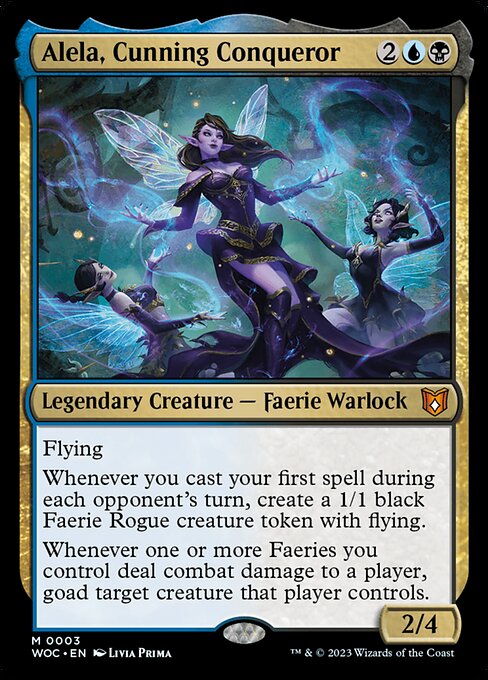
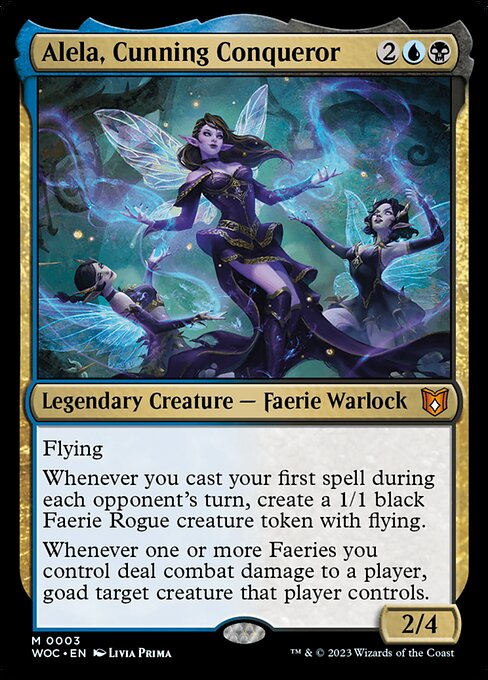
| Alela, Cunning Conqueror | Dimir (UB) | The dedicated faerie tempo commander. Cast a spell on each opponent’s turn and you make a 1/1 flying faerie — rewarding flash, counters, and instant-speed play. Best pure-tribal payoff. | $14.27 |
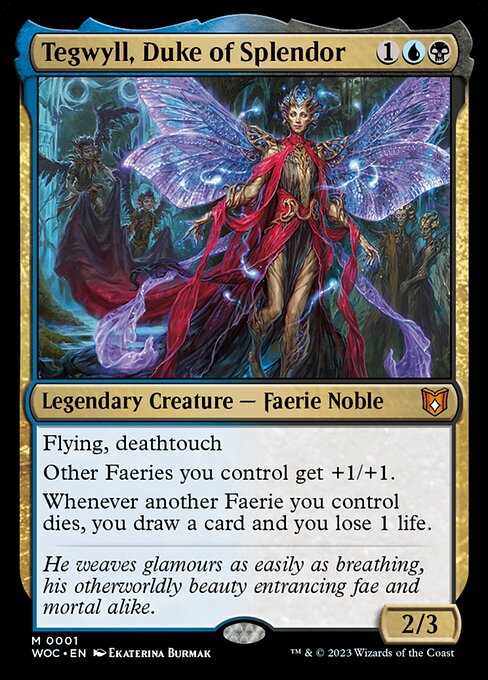
| Tegwyll, Duke of Splendor | Dimir (UB) | A faerie tribal anthem and engine from Wilds of Eldraine — builds a wide flying board and snowballs fast. The most beginner-friendly faerie commander. | $5.42 |
| Alela, Artful Provocateur | Esper (WUB) | Spawns a 1/1 flyer whenever you cast an artifact or enchantment, then buffs your fliers. More of an artifacts/enchantress build than pure faeries, but cheap and powerful. | $1.72 |
| Oona, Queen of the Fae | Dimir (UB) | The original faerie queen (Shadowmoor, 2008). A mana sink that mills opponents and makes a swarm of tokens — slower, but iconic and budget-friendly. | $1.19 |
Which should you start with? If you want the cleanest faerie experience, build Alela, Cunning Conqueror — every counterspell and flash creature you run literally builds your board. On a tighter budget, Tegwyll gives you 90% of the fun for a third of the price. New to Commander entirely? Read our step-by-step guide to building a Commander deck first, then come back.
Core faerie cards every build wants
Whether you’re on Commander or 60-card, these are the faerie staples that hold the archetype together. Almost all of them have flash, which is the whole point — you hold up interaction and only commit when it’s safe.
| Card | Role | Price |
|---|---|---|
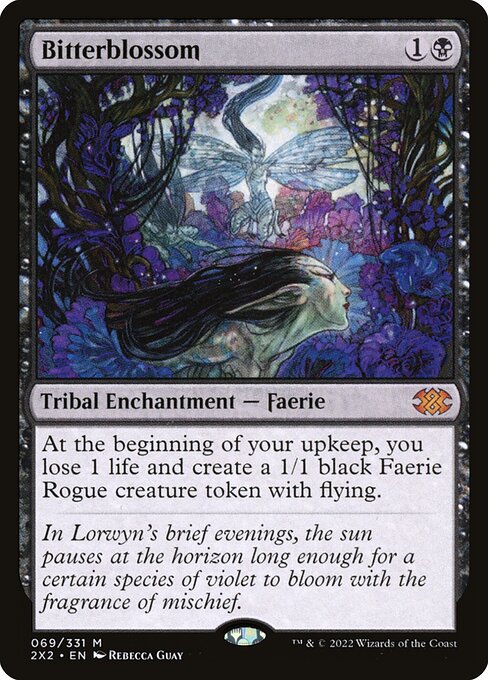
| Bitterblossom | The signature engine — a 1/1 flying faerie token every upkeep for 1 life. Fuels everything. | $33.85 |
| Spellstutter Sprite | Flash flyer that counters a spell with mana value ≤ the faeries you control. Free tempo. | $6.01 |
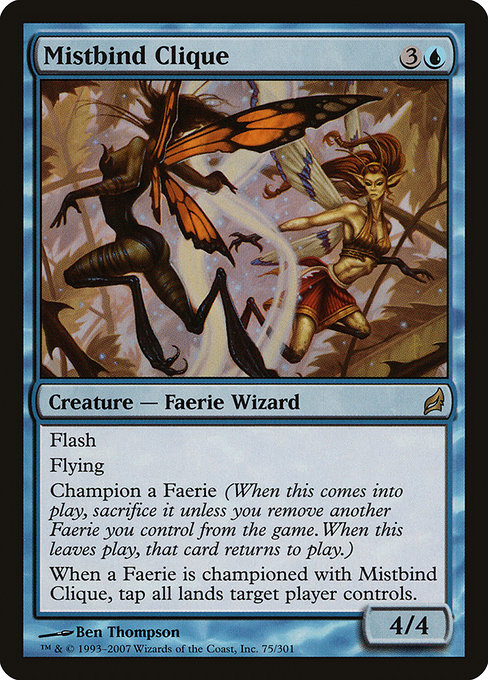
| Mistbind Clique | Flash 4/4 flyer; “champion a faerie,” then tap down a player’s lands — a near-Time Walk with Bitterblossom. | $10.64 |
| Scion of Oona | Flash faerie lord: gives your other faeries +1/+1 and shroud, protecting the board. | $13.90 |
| Faerie Mastermind | Flash 2/1 flyer that draws you a card whenever an opponent draws extra — strong in Commander. | $9.80 |
| Brazen Borrower | Adventure: bounce a permanent now, cast a flash 3/1 flyer later. Budget all-star. | $0.52 |
| Vendilion Clique | Flash 3/1 flyer that strips the best card from a hand — disruption on a body. | $3.99 |
| Faerie Seer | One-drop 1/1 flyer with scry 2 — smooths your early draws. | $0.33 |
| Snaremaster Sprite | Flash flyer that taps down a creature on entry — cheap tempo from Wilds of Eldraine. | $0.20 |
| Faerie Conclave | A “manland” that becomes a 2/1 flyer — extra threats that dodge sorcery-speed removal. | $0.54 |
You can pull every current price and printing for these on our MTG card pricing tool before you buy. Bitterblossom is the one real expense — if it’s out of budget, Tegwyll and your token-makers carry the deck without it.
Commander deckbuilding template
A consistent faerie Commander deck (around Alela or Tegwyll) wants this rough breakdown across the 99. Run your list through our MTG deck analyzer and these are the ratios it’ll push you toward:
- 36–37 lands (including Faerie Conclave and a few utility lands)
- 10–12 ramp / mana rocks — Sol Ring, Arcane Signet, Dimir Signet, Talisman of Dominance (see our best ramp cards guide)
- 22–26 faeries & flyers — your win condition and tribal payoffs
- 8–10 counterspells — the faerie game plan is interaction (pair this with our best counterspells guide)
- 6–8 spot removal + 2–3 board wipes — see best removal spells and best board wipes
- 8–10 card draw — flyers are small, so you need to refuel
Round it out with general Commander staples like Smothering Tithe ($60.26 — optional but brutal), Cyclonic Rift, and a Bident of Thassa ($0.42) to draw off your evasive board.
The classic 60-card Dimir Faeries (tempo)
If you came here for the constructed deck, the engine hasn’t changed much since Lorwyn: Bitterblossom + Spellstutter Sprite + Mistbind Clique, backed by cheap interaction. The plan is to land an early threat, protect it, and tax every spell your opponent casts while flyers close the game. A modern skeleton looks like:
- Threats (12–14): Bitterblossom ×4, Spellstutter Sprite ×4, Mistbind Clique ×3, Brazen Borrower ×3
- Disruption (10–12): Thoughtseize, Inquisition of Kozilek, Fatal Push, plus 4–6 counterspells
- Card advantage: a couple of Vendilion Clique or a planeswalker like Jace
- Lands (22): Dimir duals + Faerie Conclave + a Mutavault
It rewards tight, instant-speed play — exactly the skill faeries are famous for.
Budget faerie build (under $60)
You don’t need Bitterblossom to have fun with faeries. A budget Tegwyll Commander deck leans on cheap token-makers and the flood of sub-$1 faeries:
- Commander: Tegwyll, Duke of Splendor ($5.42) or Oona, Queen of the Fae ($1.19)
- Cheap faeries: Faerie Seer ($0.33), Snaremaster Sprite ($0.20), Brazen Borrower ($0.52), plus draft-chaff faeries from Wilds of Eldraine
- Engines: token doublers and “create a faerie” effects instead of pricey lords
- Mana: Sol Ring ($5.07), basic Dimir duals, Faerie Conclave ($0.54)
For a deeper budget shell, our best budget commanders guide pairs well here.
Build your faerie deck faster with KrakenTheMeta
Hand-tuning 100 singleton cards is the slow part. Here’s how to shortcut it:
- AI deck builder — tell it “faerie tribal commander, Alela” (or build from your own collection) and it drafts a legal, color-correct list in seconds.
- Deck analyzer — paste a list to check your mana curve, land count, and whether your faerie/interaction ratios are where they should be.
- Browse public decks — see how other players have tuned their Dimir faerie lists, then fork the ideas you like.
- Guess That Commander — sharpen your meta knowledge between games.
How to actually pilot a faerie deck
Faeries lose more games to impatience than to bad draws. The deck is built to do everything at instant speed, so the skill is knowing when to hold and when to commit. A few hard-won habits:
- Hold up mana, don’t tap out. Your best turns are the ones where you pass with mana open and let opponents walk into a Spellstutter Sprite or Snaremaster Sprite. Tapping out for a sorcery-speed play is usually a mistake.
- Sequence Bitterblossom early. The token engine snowballs, so the life loss is cheapest when you have the most turns left to use the faeries. Drop it on turn 2–3, not turn 8.
- Mistbind Clique is your tempo blowout. Flash it in on an opponent’s upkeep, champion a Bitterblossom token, and tap their lands — they effectively skip a turn. Hold it for the player who’s about to do something big.
- Protect the lord, not every creature. Scion of Oona gives shroud to your other faeries, so it’s the priority removal magnet. Keep a counter up when you deploy it.
- Pick your spots in multiplayer. In Commander, don’t counter the first spell you see — let the table trade resources, then tax the player pulling ahead. Faeries reward the patient, political pilot.
If you’re newer to instant-speed decks, practice the lines with a free list from the AI deck builder before you sink money into Bitterblossom — the playstyle clicks fast once you see a turn where everything triggers.
Faerie deck FAQ
What is the best faerie commander in MTG?
For pure faerie tribal, Alela, Cunning Conqueror is the best payoff — it turns every flash spell and counterspell into a 1/1 flying token. Tegwyll, Duke of Splendor is the best budget and beginner pick.
What colors are faerie decks?
Almost all faeries are blue-black (Dimir). Alela, Artful Provocateur is the one mainstream commander that adds white (Esper) for an artifacts/enchantments token build.
Are faeries good in Commander?
Yes — at casual and mid power they’re excellent. Evasion plus instant-speed interaction lets you defend yourself while building a flying board. They struggle most against fast combo and heavy board-wipe metas, which is why you run protection like Scion of Oona.
How many faeries should a tribal deck run?
In Commander, aim for 22–26 actual faeries/flyers alongside ~10 counterspells and ~10 removal/card-draw spells. In 60-card constructed, 12–14 threats is plenty — the deck wins on tempo, not creature count.
What’s the cheapest way to start a faerie deck?
Build around Tegwyll or Oona and skip Bitterblossom (its biggest expense at ~$34). A playable budget faerie Commander deck comes in under $60 using sub-$1 faeries and basic Dimir mana.
Conclusion
Fairy decks reward patience and precision: a swarm of evasive flyers, a stack of flash interaction, and the discipline to act at the right moment. Pick a commander that fits your table — Alela for tempo, Tegwyll for budget, Oona for nostalgia — lean on Bitterblossom and the flash package, and tune the ratios until the curve sings. When you’re ready to assemble it, the AI deck builder and deck analyzer will get you from idea to a legal, optimized list in minutes. Now go tap their lands and fly over for the win.
Want more tribal guides? See our overview of the best MTG tribes and how to build them.
Build your next deck with AI
KrakenTheMeta’s AI deck builder researches the current meta and writes you a complete, format-legal decklist in about a minute — free to try.
Build a Deck with AIor browse community decks