
Regenerate in MTG: Rules, Best Cards + Why It Left Standard
Regenerate is the oldest safety net in Magic and one of the most misunderstood. It has been on cards since Alpha in 1993, it appears on 272 paper cards, and — as of today — not one of them is legal in Standard. If you have ever tapped a Troll, said “I regenerate,” and then watched your opponent exile it anyway, this guide is for you.
Everything below was measured against the live Scryfall database on 23 August 2026, not recalled from memory. Card counts, colours, printing years, format legality and prices all come from the same snapshot, and every number is checksummed.
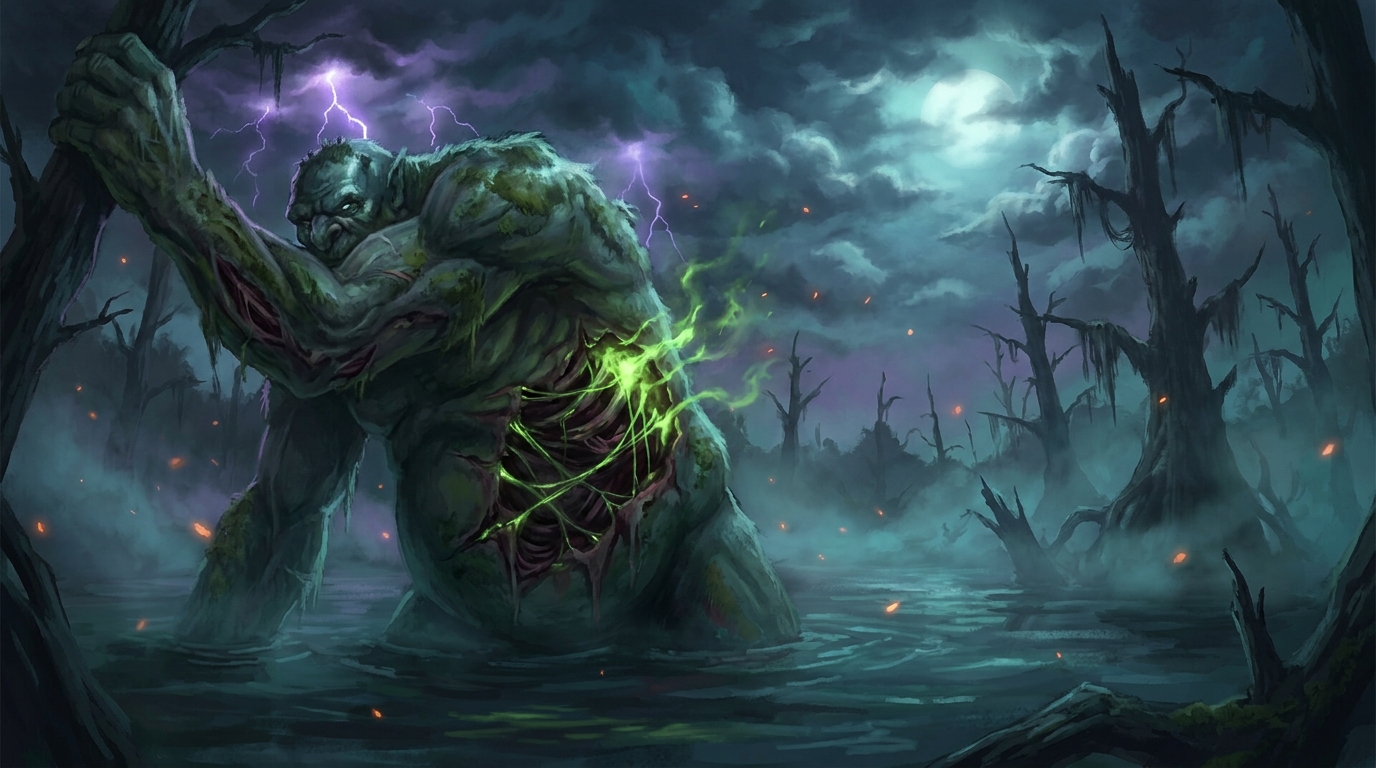
What regenerate actually does
Regenerate is a replacement effect, not a healing effect and not a resurrection effect. When you activate a regeneration ability, nothing visible happens: you create a regeneration shield that sits on the permanent and waits.
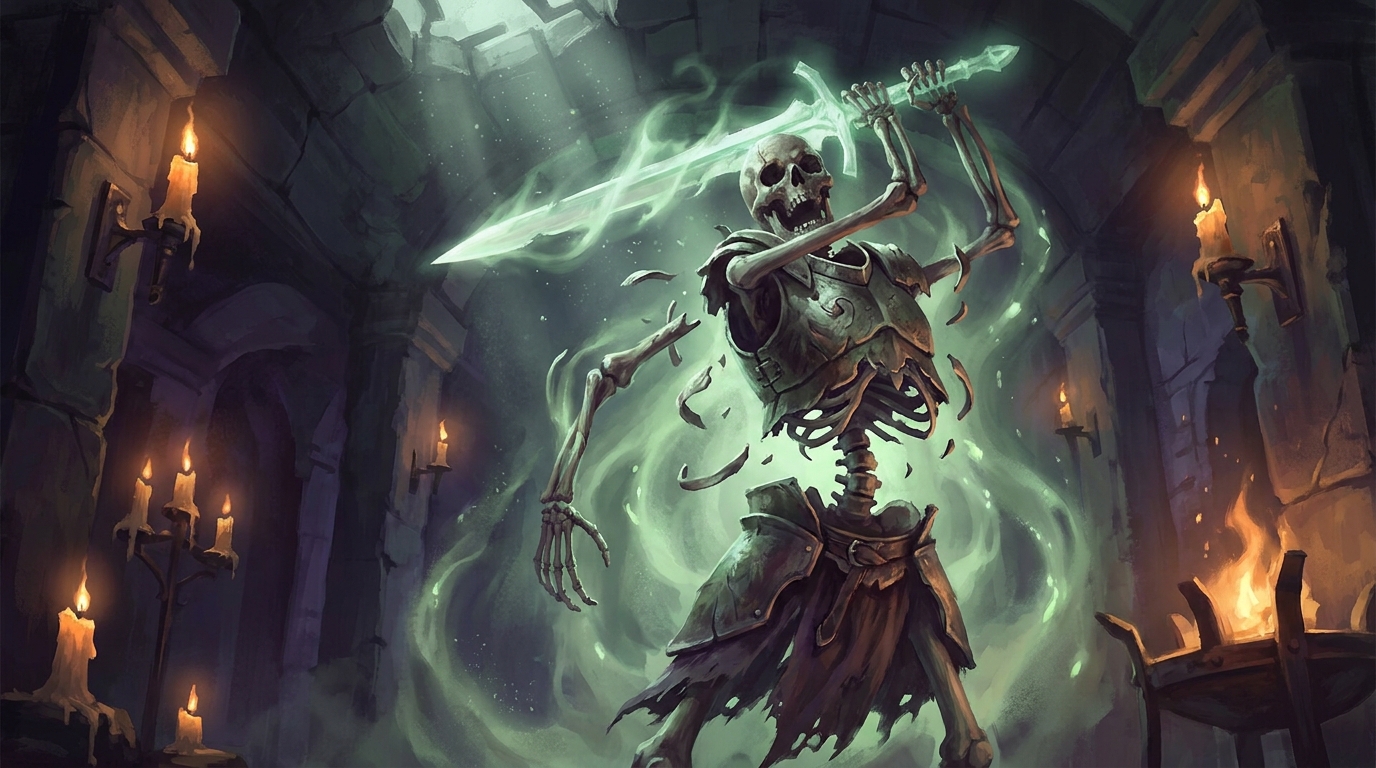
The current reminder text, printed on Drudge Skeletons, says it exactly:
{B}: Regenerate this creature. (The next time this creature would be destroyed this turn, instead tap it, remove it from combat, and heal all damage on it.)
Three things happen when the shield is spent, and players routinely forget the middle one:
- The creature is not destroyed. It stays on the battlefield.
- It becomes tapped and is removed from combat — so a regenerated blocker deals no combat damage that turn, and a regenerated attacker stops attacking.
- All damage marked on it is healed.
Two consequences follow that decide most games. First, the shield must exist before the destruction happens — you cannot regenerate a creature that has already died. Second, shields stack: activate the ability three times and you have three shields, each of which absorbs one destruction event that turn. Against a board of small blockers, an untapped Troll with four mana open is effectively unkillable in combat.
The four things regeneration does not stop
This is where the keyword earns its reputation for confusion. Regeneration only replaces the specific event destroy. Anything that kills a creature by some other route ignores the shield completely.
| Removal type | Does regeneration save it? | Why | Example |
|---|---|---|---|
| Lethal damage | Yes | Damage destroys, and destruction is what the shield replaces | Combat, burn spells |
| “Destroy target creature” | Yes | Same event, unless the card denies it | Doom Blade, Go for the Throat |
| Exile | No | Exiling is not destroying | Swords to Plowshares, Path to Exile |
| Sacrifice | No | Sacrificing is a cost or effect, never destruction | Edict effects, your own sac outlets |
| -X/-X to zero toughness | No | Zero toughness is a state-based action, not destruction | Toxic Deluge, Infest, Grasp of Darkness |
| The legend rule | No | The duplicate is put into the graveyard by a state-based action | Two copies of the same legend |
| Bounce and tuck | No | The creature changes zone without ever being destroyed | Cyclonic Rift |
| “It can’t be regenerated” | No | The effect explicitly turns the shield off | Wrath of God, Terminate |
The legend rule case surprises people most often. Playing a second copy of your commander does not destroy the first — you choose one, and the other is put into the graveyard as a state-based action. A stack of regeneration shields does absolutely nothing about it. The same logic explains why protection, hexproof and indestructible each fail against a different half of the removal spectrum: they all replace or prevent one specific event, and Magic has many.
The 272 cards, measured
Searching Scryfall for every paper card carrying the Regenerate keyword returns 272 cards. That figure was cross-checked twice: the live search returns 272, and the bulk Oracle file returns 277 entries, five of which are not tournament-legal card objects (a token, two Vanguard cards, an Un-set instant and a holiday promo). 277 minus 5 is 272, and the two methods agree exactly.
Split by colour, the mechanic is far more lopsided than its reputation suggests:
| Colour | Cards | Share of 272 |
|---|---|---|
| Mono-black | 95 | 34.9% |
| Mono-green | 78 | 28.7% |
| Colourless | 31 | 11.4% |
| Multicolour | 27 | 9.9% |
| Mono-white | 22 | 8.1% |
| Mono-red | 12 | 4.4% |
| Mono-blue | 7 | 2.6% |
| Total | 272 | 100% |
Black and green together hold 63.6% of the mechanic. Blue has seven cards in thirty-three years. Regenerate is often described as a green Troll mechanic, but black has the larger share, and the reason is visible on the card faces: Skeleton is the most common creature type in the set, ahead of Troll and Zombie.
By wording, the 272 divide into three groups that sum exactly:
| Wording | Cards | What it means |
|---|---|---|
| “Regenerate this creature/permanent” | 171 | Self-regenerating threats — the shield only ever protects the card itself |
| “Regenerate target …” | 54 | Granters — the flexible half, and the half worth building around |
| Other wordings | 47 | Auras, mass effects, conditional triggers, “if it would be destroyed, regenerate it” |
| Total | 272 |
The seven-year silence
Group the 272 cards by the year of their first paper printing and the mechanic’s whole design history falls out of the data without being asked for:
| Era | Debuts | Per year |
|---|---|---|
| 1993–1999 | 96 | 13.7 |
| 2000–2009 | 114 | 11.4 |
| 2010–2016 | 56 | 8.0 |
| 2017–2023 | 0 | 0.0 |
| 2024–2026 | 3 | 1.0 |
| Total | 272 |
Seven consecutive years with zero new regenerate cards — 2017, 2018, 2019, 2020, 2021, 2022 and 2023 — and 2026 is currently a zero year too. Nothing else in the curve looks like that. The last two cards to debut in a Standard-legal expansion were Unnatural Endurance and Birthing Hulk, both in Oath of the Gatewatch on 22 January 2016. Wizards dropped regenerate from the evergreen keyword list immediately afterwards, citing rules complexity and flavour drift, and the next set — Kaladesh — printed none. The measurement and the design story land on the same date without being fitted to each other.
The mechanic is not literally dead, though. Three cards have debuted since the gap, and every one of them arrived in a supplemental product rather than a Standard set:
| Card | Released | Product | Price |
|---|---|---|---|
| Exterminator Magmarch | 14 Jun 2024 | Modern Horizons 3 Commander | $0.32 |
| Wolverine, Best There Is | 4 Nov 2024 | Secret Lair (reprinted in Marvel Universe, 26 Jun 2026) | $21.05 |
| Accursed Duneyard | 14 Feb 2025 | Aetherdrift Commander | $0.48 |
Wolverine is the tell. Of every mechanic Wizards could have given a character whose entire identity is healing from anything, they reached for regenerate — and put it in a Commander-only product. The most recent paper printing of any regenerate card in Magic is Wolverine in Marvel Universe, 26 June 2026.
Best regenerate creatures
Self-regenerating threats are the larger half of the mechanic and the easier half to use: no setup, no second card, just mana held open. These are the ones still worth a slot, with format legality and price checked on 23 August 2026.
| Creature | Cost | Regeneration cost | Why it is good | Legal in | Price |
|---|---|---|---|---|---|
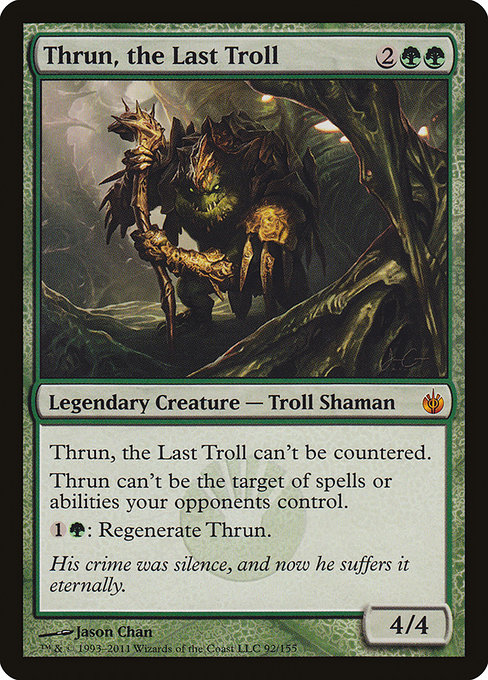
| Thrun, the Last Troll | {2}{G}{G} | {1}{G} | Can’t be countered, hexproof, and regenerates — three separate answers must all miss | Modern, Legacy, Commander | $0.84 |
| Skithiryx, the Blight Dragon | {3}{B}{B} | {B}{B} | Flying infect with haste on demand; ten poison in two swings | Modern, Legacy, Commander | $12.85 |
| Ink-Eyes, Servant of Oni | {4}{B}{B} | {1}{B} | Ninjutsu plus graveyard theft, and it survives the crack-back | Modern, Legacy, Commander | $13.59 |
| Korlash, Heir to Blackblade | {2}{B}{B} | {1}{B} | Scales with Swamps and fetches two more; a mono-black finisher that refuses to die | Modern, Legacy, Commander | $3.24 |
| Golgari Grave-Troll | {4}{G} | {1} + remove a counter | Dredge 6 and an enormous body — banned in Modern, legal everywhere else | Legacy, Commander | $2.24 |
| Deity of Scars | {B/G}×5 | {B/G} + remove a counter | A 7/7 trampler for five that carries its own two-shot shield | Modern, Legacy, Commander | $1.30 |
| Mossbridge Troll | {5}{G}{G} | Free — automatic | Regenerates itself with no activation cost at all, then swings for 25 | Modern, Legacy, Commander | $1.66 |
| Twisted Abomination | {5}{B} | {B} | Swampcycling early, a resilient 5/3 late; still Pauper-legal | Modern, Pauper, Commander | $0.21 |
| Wolverine, Best There Is | {1}{R}{G} | {1}{G} | Doubles all damage he deals and grows every turn he connects | Commander | $21.05 |
| Crypt Sliver | {1}{B} | {T} of any Sliver | Turns an entire Sliver board into a mutual regeneration engine | Legacy, Pauper, Commander | $1.75 |
| Drudge Skeletons | {1}{B} | {B} | The Alpha original, and still a legitimate Pauper blocker | Modern, Pauper, Commander | $0.42 |
| Will-o’-the-Wisp | {B} | {B} | A one-mana flying wall that stonewalls anything without trample | Modern, Legacy, Commander | $0.33 |
The granters worth building around
The 54 cards that regenerate something else are where the mechanic stops being a curiosity. A granter turns every creature you control into a conditional survivor, and several of them cost almost nothing.
| Spell | Cost | What it does | Price |
|---|---|---|---|
| Asceticism | {3}{G}{G} | Hexproof for your whole board and {1}{G} to regenerate any of it — the single best regeneration card ever printed | $8.30 |
| Wrap in Vigor | {1}{G} | Regenerates every creature you control for two mana; a two-mana counterspell against most board wipes | $1.31 |
| Golgari Charm | {B}{G} | Mass regeneration, or -1/-1 to sweep tokens, or enchantment removal | $2.33 |
| Dawn Charm | {1}{W} | Fog, regenerate, or counter a spell aimed at you — three different outs on one card | $3.18 |
| Debt of Loyalty | {1}{W}{W} | Regenerate a creature and steal it permanently if the shield is used | $13.19 |
| Swarmyard | Land | Free regeneration every turn for Insects, Rats, Spiders and Squirrels | $6.36 |
| Accursed Duneyard | Land | The modern Swarmyard: Shades, Skeletons, Specters, Spirits, Vampires, Wraiths and Zombies | $0.48 |
| Welding Jar | {0} | A free artifact that saves an artifact — the cheapest insurance in the game | $2.86 |
| Fanatical Devotion | {2}{W} | Sacrifice a creature to regenerate one; the shield outlasts the sweeper | $1.62 |
| Dark Privilege | {1}{B} | A common Aura that turns spare creatures into repeated shields | $0.25 |
| Full Moon’s Rise | {1}{G} | Anthem for Werewolves, then sacrifice it to regenerate all of them at once | $0.37 |
| Life Matrix | {4} | The 1994 Legends rare that grants a reusable shield; the most expensive regenerate card in paper at $24.10 | $24.10 |
One number puts the whole list in perspective: of the 272 regenerate cards, 243 have a listed price and 221 of those — 90.9% — are under one dollar. The median is $0.20. This is the cheapest resilience package in Magic, and the reason is simply that no Standard player has needed to buy any of it for a decade.
Regenerate vs indestructible, persist, undying and Umbra armor
Every mechanic below answers the question “how does this creature survive?” and each one answers it differently. Counts are live Scryfall figures for paper cards, taken with one query shape so they are comparable.
| Mechanic | Paper cards | Legal in Standard | Stops damage? | Stops “destroy”? | Stops exile / sacrifice / -X/-X? |
|---|---|---|---|---|---|
| Regenerate | 272 | 0 | Yes, once per shield | Yes, unless denied | No |
| Indestructible | 112 | 20 | Yes, always | Yes, always | No |
| Persist | 25 | 0 | Returns it afterwards | Returns it afterwards | Yes — it triggers on dying, however that happened |
| Undying | 24 | 0 | Returns it afterwards | Returns it afterwards | Yes — same |
| Umbra armor | 17 | 0 | Yes — the Aura dies instead | Yes — the Aura dies instead | No |
Three details in that table are worth stating plainly. Indestructible is strictly better than regeneration in combat — it does not tap the creature, does not remove it from combat, and never runs out — which is exactly why the phrase “gains indestructible until end of turn” (now on 157 paper cards) took over the role. Our full indestructible guide covers where it fails.
Persist and undying are better against everything regeneration cannot touch, because they trigger on the creature dying by any route, exile aside. And the mechanic most players still call “totem armor” is spelled Umbra armor in current Oracle text — 17 cards, all Auras, none Standard-legal.
The answer cards: “it can’t be regenerated”
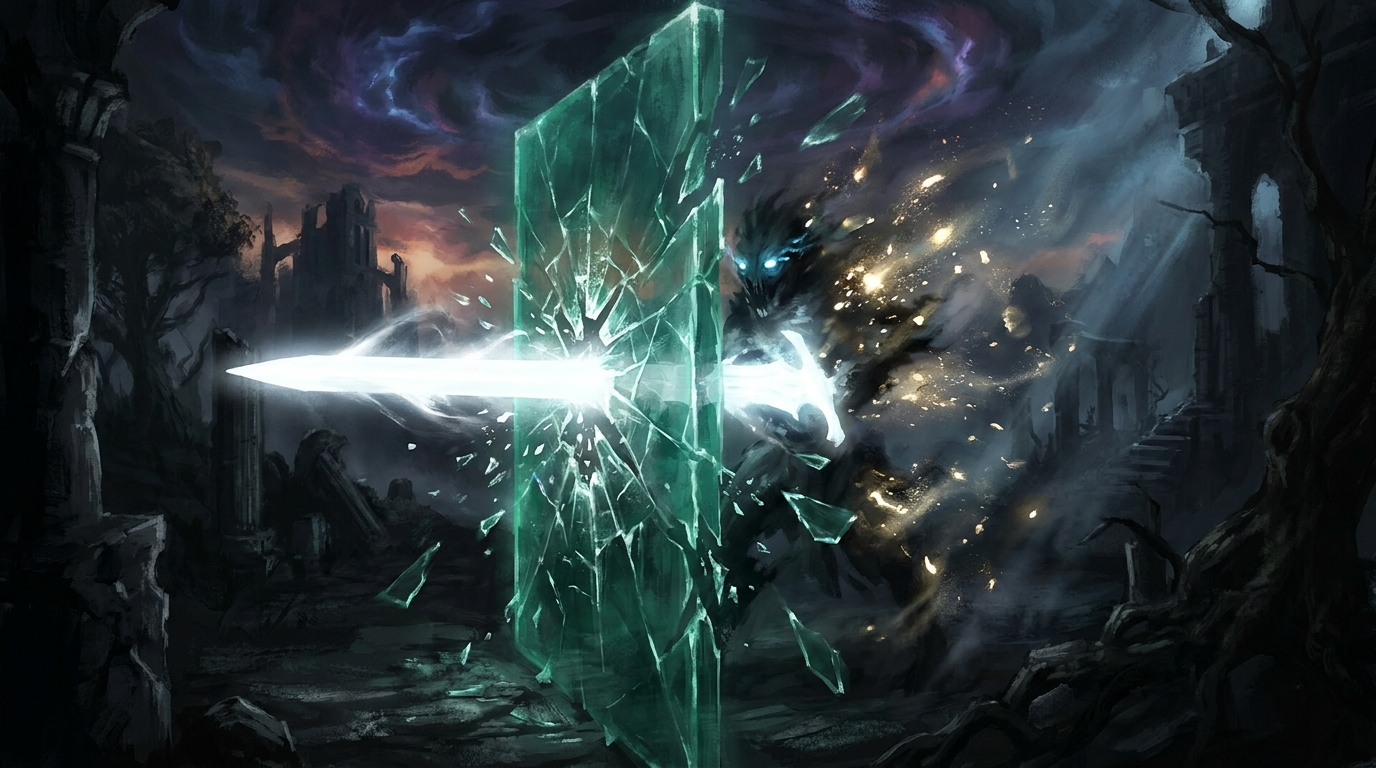
152 paper cards carry a clause that switches regeneration off, and the symmetry with the mechanic itself is remarkable: exactly zero of them are legal in Standard right now either. (That is a real measurement, not a broken filter — the same query shape finds 79 Standard-legal cards reading “destroy target creature”.) Wizards retired the mechanic and its answer clause together.
The clause survives on reprints of older cards. Four of the most-played examples were reprinted during 2026 and still carry it word for word.
| Spell | Cost | Text | Price |
|---|---|---|---|
| Wrath of God | {2}{W}{W} | Destroy all creatures. They can’t be regenerated. | $3.69 |
| Damnation | {2}{B}{B} | Destroy all creatures. They can’t be regenerated. | $21.29 |
| Terminate | {B}{R} | Destroy target creature. It can’t be regenerated. | $0.36 |
| Putrefy | {1}{B}{G} | Destroy target artifact or creature. It can’t be regenerated. | $0.34 |
| Pongify | {U} | Destroy target creature. It can’t be regenerated. Its controller creates a 3/3 Ape. | $1.90 |
| Rapid Hybridization | {U} | Destroy target creature. It can’t be regenerated. Its controller creates a 3/3 Frog Lizard. | $1.28 |
| Damn | {B}{B} | Destroy target creature, which can’t be regenerated — with overload {2}{W}{W} for all of them | $1.98 |
| Winds of Rath | {3}{W}{W} | Destroy all creatures that aren’t enchanted. They can’t be regenerated. | $0.35 |
A curiosity from the same pass: four cards do both — they grant regeneration and carry the denial clause on the same card. Knight of the Holy Nimbus, Clergy of the Holy Nimbus, Orcish Healer and Drudge Spell each read from both sides of the argument.
Modern removal solved the problem differently. Rather than adding a clause, designers moved to effects regeneration was never able to answer: exile, -X/-X, sacrifice and bounce. If you are building a removal suite today, our guides to the best removal spells and best board wipes are organised around exactly that distinction.
Building a regeneration shell in Commander
Regenerate is a Commander mechanic now, and it is a good one there for a specific reason: multiplayer tables run far more destroy effects and far more combat than a one-on-one format does, and a granter blanks all of it for one mana at a time. The failure mode is equally specific — the moment someone casts Toxic Deluge or a Cyclonic Rift, your shields are decoration.
A Golgari shell built around Asceticism is the standard version. Here is a working core, all of it legal in Commander:
Golgari Regeneration Core
14 cards — one click loads the full list into a TCGplayer cart so you can check real prices and grab the whole deck at once.
Buy this deck on TCGplayerAffiliate link — buying through it supports KrakenTheMeta at no extra cost to you.Three building rules that come straight out of the data above:
- Prioritise granters over self-regenerators. Only 54 of 272 cards protect anything other than themselves, and they are the ones that scale with your board.
- Hold the mana, not the card. Regeneration is an instant-speed decision. A Troll with two mana up is a threat; the same Troll tapped out is a 4/4.
- Do not treat it as your only protection. Pair it with something that answers exile and sacrifice, because regeneration answers neither. Our protection, hexproof, shroud and ward guide maps which keyword covers which gap.
If you want the whole shell built for you, KrakenTheMeta’s AI deck builder will assemble a full 100-card Commander list around any of these commanders, and you can browse what other players have built on the public decks page. To check whether the cheap half of this list is still cheap, the card price tool pulls live numbers.
Will regenerate ever come back?
The honest answer from the data is that it already has, in a limited way. Three new cards in three years is not a revival, but it is not a retirement either — it is the pattern Wizards uses for mechanics that are too confusing for a Standard set and perfectly fine in a Commander precon. Standard’s current format contains zero regenerate cards and zero cards that deny it, and nothing in the last three years of releases suggests that is about to change.
What that means practically: the entire mechanic is a Commander, Legacy and Pauper resource, it costs almost nothing, and it is the only widely available protection package that most opponents will misplay against, because they will reach for a destroy effect first. 271 of the 272 cards are legal in Commander — the single exception being Golgari Grave-Troll’s Modern ban, which does not apply there. One ban in thirty-three years is about as clean a record as a mechanic can have. You can see which cards Wizards has taken away in our complete MTG banned list.
Frequently asked questions
What does regenerate mean in MTG?
Regenerate creates a shield on a permanent. The next time that permanent would be destroyed during the current turn, it is not destroyed — instead it is tapped, removed from combat, and all damage on it is healed. The shield lasts until end of turn if unused.
Does regenerate stop exile?
No. Regeneration only replaces the event “destroy”. Exiling a creature never destroys it, so Swords to Plowshares, Path to Exile and every other exile effect go straight through any number of shields.
Does regenerate stop sacrifice?
No. Sacrificing is not destruction, so edict effects and sacrifice outlets ignore regeneration entirely. This is the single most common way a regenerating creature actually dies in Commander.
Does regenerate work against -X/-X effects?
No. A creature with zero or less toughness is put into the graveyard by a state-based action rather than being destroyed. Toxic Deluge, Infest and Grasp of Darkness all kill through a full stack of shields.
Does regenerate save a creature from the legend rule?
No. The legend rule puts the extra copy into the graveyard as a state-based action, which is not destruction. See our legend rule guide for the full sequence.
Can you regenerate a creature after it dies?
No. Regeneration is a replacement effect and has to be on the permanent before the destruction event. Once the creature is in the graveyard it is too late — you need reanimation, not regeneration.
Do regeneration shields stack?
Yes. Each activation creates a separate shield, and each shield absorbs one destruction event that turn. Activating four times means four separate saves.
Why does my creature get tapped when it regenerates?
Tapping is part of the replacement effect, not a cost. The shield replaces destruction with “tap it, remove it from combat, heal all damage” — which is why a regenerated blocker deals no combat damage and a regenerated attacker stops attacking.
Is regenerate still in Standard?
No. Zero of the 272 paper cards with regenerate are Standard-legal as of 23 August 2026, and zero of the 152 cards that say “can’t be regenerated” are either. The last regenerate cards printed in a Standard set were Unnatural Endurance and Birthing Hulk in Oath of the Gatewatch, January 2016.
Why did Wizards stop printing regenerate?
Design dropped it from the evergreen keyword list after Oath of the Gatewatch, citing rules complexity and flavour drift — players consistently expected it to work like healing or resurrection rather than as a narrow replacement effect. The role was handed to “gains indestructible until end of turn”, which now appears on 157 paper cards.
What is the best regenerate card in MTG?
Asceticism, by a wide margin. It grants hexproof to your entire board and lets you regenerate any of your creatures repeatedly for {1}{G}. Among creatures, Thrun, the Last Troll stacks three separate defences on one body.
What is the most expensive regenerate card?
Life Matrix, the 1994 Legends rare, at $24.10 in the 23 August 2026 snapshot, followed by Wolverine, Best There Is at $21.05. Almost everything else is pocket change: 90.9% of priced regenerate cards are under a dollar.
Are any regenerate cards banned?
Exactly one, out of 272: Golgari Grave-Troll is banned in Modern, for its dredge value rather than for regenerating. It is legal in Legacy, Vintage and Commander.
Is regenerate good in Commander?
Yes, with a caveat. Commander tables run a lot of combat and a lot of “destroy” effects, and a single granter blanks all of it cheaply. But it does nothing against exile, sacrifice, -X/-X sweepers or bounce, so it should be one layer of your protection plan rather than the whole plan.
Is totem armor the same as regenerate?
No, and the name has changed. The mechanic is called Umbra armor in current Oracle text, it appears on 17 Aura cards, and instead of tapping the creature it destroys the Aura in the creature’s place. None of the 17 is Standard-legal.
Build your next deck with AI
KrakenTheMeta’s AI deck builder researches the current meta and writes you a complete, format-legal decklist in about a minute — free to try.
Build a Deck with AIor browse community decks

2 Comments
Comments are closed.