
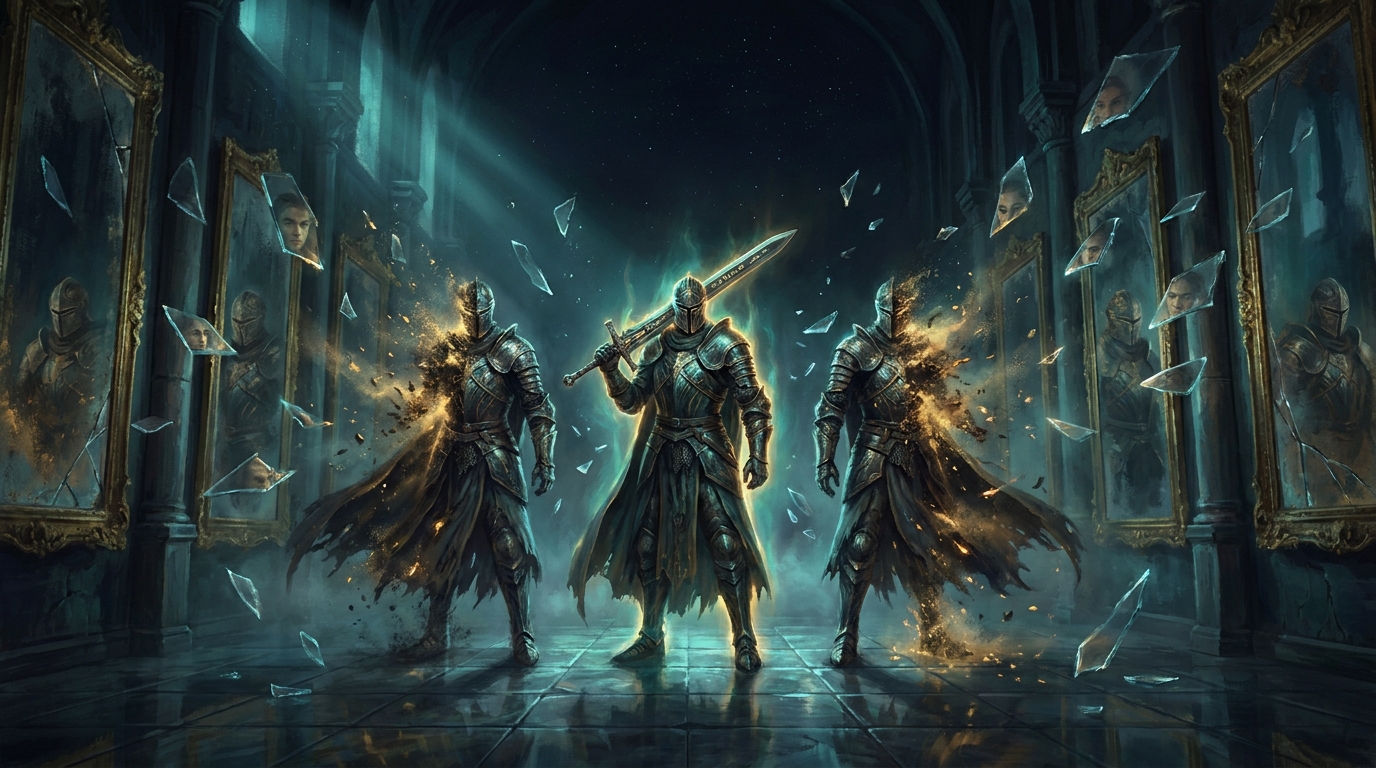
MTG Legend Rule Explained: What It Actually Says, Every Way Around It, and the Cards That Break It (2026)
The legend rule is one line long, it has not meaningfully changed since 2013, and it is still the most consistently mis-explained rule in Magic. Search for it and you will be told that you may only run four legendary cards in a deck (there is no such rule), that it only applies to creatures (it applies to every legendary permanent), that both copies die (they have not since 2013), and that the loser goes to some kind of limbo (it goes to the graveyard).
So here is the rule, quoted from the source, followed by everything that actually trips people up: how it resolves, why you cannot respond to it, the exact difference between “same name” and “same character,” all nine cards in Magic that switch it off, the legal ways to make copies of your legends anyway, and the traps that quietly kill your board.
Every rule below is quoted verbatim from the official Magic: The Gathering Comprehensive Rules, effective 7 August 2026. Every card is verified against the live Scryfall database — oracle text, type line, and format legality at the time of writing.
The legend rule, in one sentence
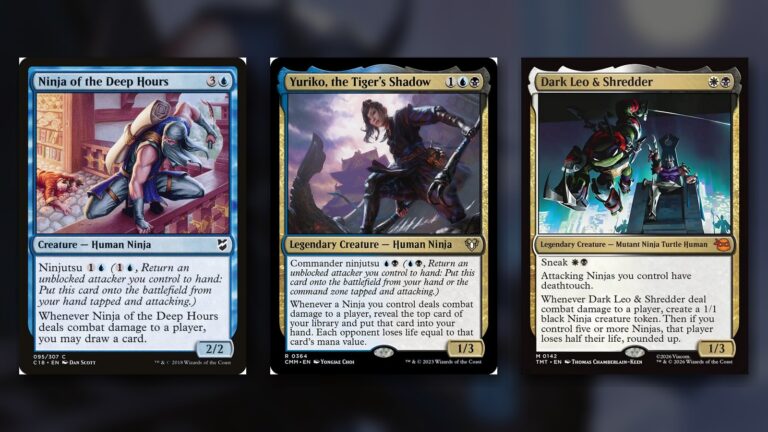
CR 704.5j — “If two or more legendary permanents with the same name are controlled by the same player, that player chooses one of them, and the rest are put into their owners’ graveyards. This is called the ‘legend rule.'”
Four things are load-bearing in that sentence, and each one is a myth-killer:
- “legendary permanents” — not “creatures.” Lands, artifacts, enchantments, planeswalkers and battles are all included.
- “with the same name” — name, not character, not card. This is the one that matters most this month.
- “controlled by the same player” — you and your opponent can each have your own. This is the 2013 change.
- “that player chooses” — you pick the survivor, and you may keep the one you just played.
The supertype rule confirms the scope explicitly:
CR 205.4d — “Any permanent with the supertype ‘legendary’ is subject to the state-based action for legendary permanents, also called the ‘legend rule’ (see rule 704.5j).”
Four things the top search results still get wrong
This is not a strawman. These are claims sitting on page one and page two for this exact query right now.
| What you’ll read | What the rules actually say |
|---|---|
| “You’re only allowed four legendary cards in your deck, and no copies of the same one.” | No such rule exists. Deck limits come from format rules — four copies of a card in Constructed, one copy in Commander singleton. The legend rule is about the battlefield, not the deck. You can run four copies of a legendary creature in Standard and that is completely legal. |
| “No two legendary creatures with the same name.” | CR 205.4d applies it to every legendary permanent. Two copies of a legendary land, artifact, enchantment or planeswalker collide exactly the same way. |
| “If two are on the battlefield, all are put into their owners’ graveyards.” | That was the pre-2013 rule and it checked the whole battlefield. Today it is per player, and only the extras die — you keep one. |
| “The extra copy goes into a limbo zone.” | It goes to the graveyard. There is no limbo zone. It can be reanimated, it triggers death triggers, and it fills your yard for delirium and threshold. |
| “There’s also a planeswalker uniqueness rule.” | Removed. CR 306.4: “This rule has been removed and planeswalker cards printed before this change have received errata.” Two different Jace planeswalkers coexist fine. |
That last one deserves a moment. The planeswalker uniqueness rule used to stop you controlling two planeswalkers sharing a planeswalker type — two Jaces, two Chandras — regardless of name. It is gone. The rules file is blunt about it: “This rule was called the ‘planeswalker uniqueness rule’ and no longer exists.” Old cards were errata’d. Today planeswalkers follow the same legend rule as everything else, which is why Jace, Vryn’s Prodigy and Jace, Telepath Unbound can share a battlefield with any other differently-named Jace.
How it actually resolves — and why you can’t respond
The legend rule is a state-based action. That single word answers most of the follow-up questions people ask, because state-based actions do not use the stack and nobody gets a window.
CR 117.5 — “Each time a player would get priority, the game first performs all applicable state-based actions as a single event… Then the player who would have received priority does so.”
So the sequence is fixed:
| Step | What happens |
|---|---|
| 1 | Your second copy of a legend finishes entering the battlefield. |
| 2 | Before any player would receive priority, the game checks state-based actions. |
| 3 | The legend rule applies. You choose which one survives. |
| 4 | The rest are put into their owners’ graveyards. Nothing goes on the stack, so nothing can be responded to. |
| 5 | Any death triggers from step 4 go on the stack. Now a player gets priority. |
Two consequences people get wrong at the table. First, you cannot respond to the legend rule — there is no window between the copy arriving and the extra dying, so you cannot sacrifice the old one for value “in response.” Second, you may keep the new one. Nothing forces you to keep the older permanent, which matters when the new copy is untapped, has a counter on it, or entered as a copy of something better. If you want the details of how priority and state-based actions interact, our guide to flash, priority and the stack walks the whole timing system, and our indestructible guide covers the other state-based actions that put permanents in the graveyard without destroying them — indestructible does not save a creature from the legend rule, because the legend rule never destroys anything.
“Same name” is not “same character” — and The Hobbit is about to prove it
This is the single most useful thing in this article for the next two weeks. The rule keys on name, and the rules define that narrowly:
CR 201.2a — “Two or more objects have the same name if they have at least one name in common, even if one or more of those objects have additional names.”
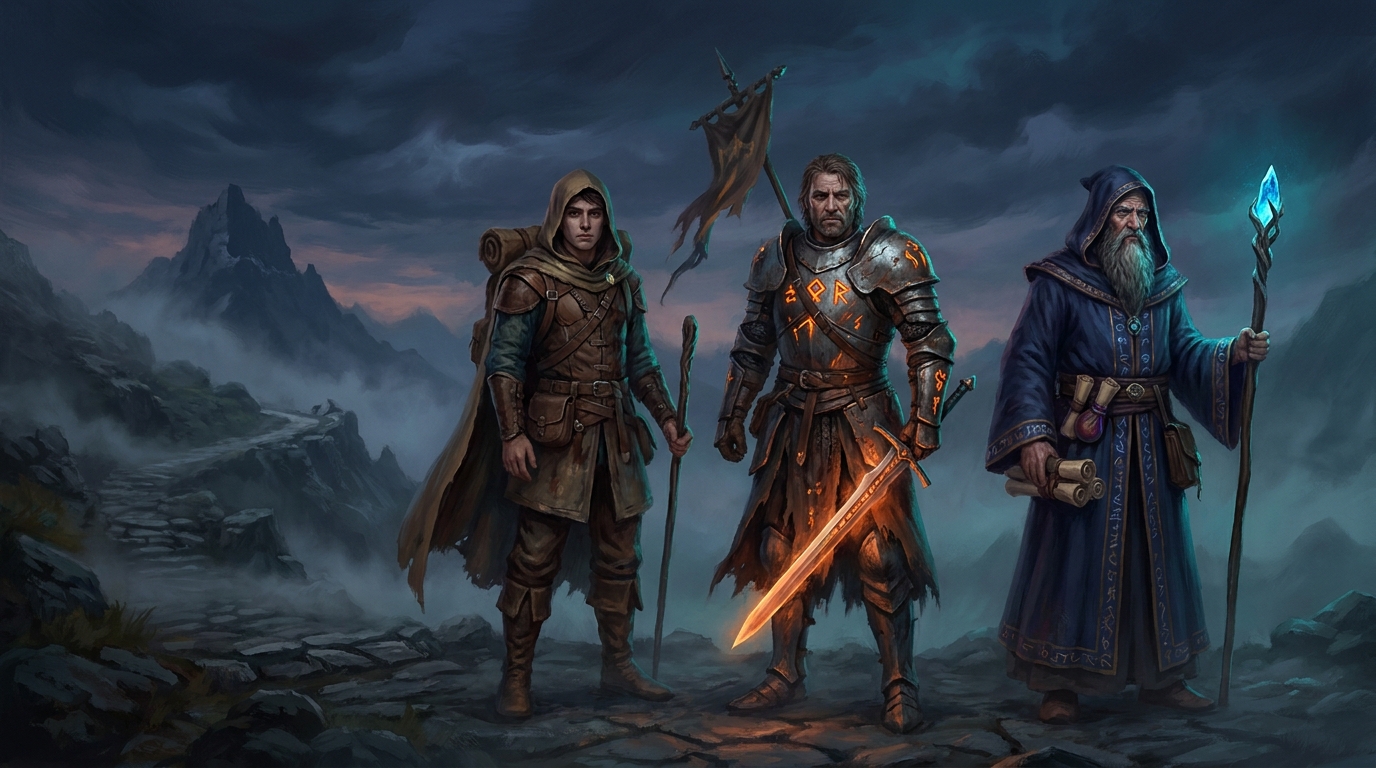
Two cards depicting the same character with different card names are, as far as Magic is concerned, two completely different permanents. The Hobbit (set code HOB, released 14 August 2026, 321 cards) is going to put that in front of every table during prerelease weekend, because it prints multiple differently-named versions of the same characters.
| Character | Differently-named legendary versions in The Hobbit | Legend rule applies between them? |
|---|---|---|
| Bilbo | Bilbo Baggins, Burglar · Bilbo, Luckwearer · Bilbo, Thief in the Night | No — three distinct names |
| Gandalf | Gandalf, Goblins’ Bane · Gandalf, Spark Starter · Gandalf, Wandering Wizard | No |
| Smaug | Smaug, the Great Calamity · Smaug the Magnificent · Smaug, Wicked Worm | No |
| Thorin | Thorin, Mountain-king · Thorin Oakenshield | No |
| Beorn | Beorn, Reluctant Host · Beorn the Fierce | No |
| Dáin | Dáin Ironfoot · Dáin, Lord of the Iron Hills | No |
| Gollum | Gollum, Riddle Master · Gollum, Silent Slinker · Gollum the Abandoned | No |
Three Bilbos on your battlefield at once is completely legal. So is a board with all three Gandalfs. The set contains 55 legendary cards across creatures, equipment and adventures, and the character-name overlap is dense enough that this will come up on day one of prerelease. If you are drafting or playing Sealed with it, our The Hobbit set guide covers the products and mechanics, and the best Hobbit commanders breakdown ranks the legends for EDH.
One honesty note: because The Hobbit does not release until 14 August 2026, Scryfall currently reports every card in the set as not yet legal in Commander. They become legal on the release date, not at prerelease.
The keyword that runs into this rule most often is myriad, whose token copies of a legendary creature are legendary copies with the same name. Our myriad guide counts all 23 myriad cards and covers both ways to play that collision: on purpose, with Blade of Selves on Kokusho, the Evening Star so that every copy dies on arrival and drains the table, or switched off, with The Master, Multiplied on the battlefield, where the legend rule ignores your creature tokens and the copies stay.
Every card in Magic that turns the legend rule off
There are exactly nine cards whose text references the legend rule. Only one of them switches it off for everybody.

| Card | What it actually says | Scope |
|---|---|---|
| Mirror Gallery — {5} Artifact | “The ‘legend rule’ doesn’t apply.” | Everyone. No “you control” clause — your opponents get it too |
| Mirror Box — {3} Artifact | “The ‘legend rule’ doesn’t apply to permanents you control.” Plus anthem effects | You only |
| Sakashima of a Thousand Faces — {3}{U} | “The ‘legend rule’ doesn’t apply to permanents you control.” Enters as a copy; has partner | You only |
| Cadric, Soul Kindler — Legendary Creature | “The ‘legend rule’ doesn’t apply to tokens you control” | Your tokens only |
| The Master, Multiplied — Legendary Creature | “The ‘legend rule’ doesn’t apply to creature tokens you control.” Has myriad | Your creature tokens |
| Council of Reeds — Legendary Creature | “The ‘legend rule’ doesn’t apply to creatures you control” | Your creatures |
| Sliver Gravemother — Legendary Creature | “The ‘legend rule’ doesn’t apply to Slivers you control” | Your Slivers |
| Spider-Verse — {3} Enchantment | “The ‘legend rule’ doesn’t apply to Spiders you control” | Your Spiders |
| Brothers Yamazaki — Legendary Creature | “If there are exactly two permanents named Brothers Yamazaki on the battlefield, the ‘legend rule’ doesn’t apply to them” | Exactly two — a third still dies |
Three details worth pulling out. Mirror Gallery is symmetric — its oracle text is four words long and contains no “you control” clause, so in a four-player pod you have just handed everyone permission to double up on their own legends. Mirror Box is the strictly-better card for most decks: it is two mana cheaper, one-sided, and adds two anthem effects on top. And Brothers Yamazaki is the strangest card in Magic’s rules text — it works at exactly two and breaks at three.
The legal way around it: make the copy nonlegendary
You do not need to switch the rule off. You need the copy to not share a name — or to not be legendary in the first place. Copy effects normally hand you the problem, because copying grabs the supertype:
CR 707.2 — “The copiable values are the values derived from the text printed on the object (that text being name, mana cost, color indicator, card type, subtype, supertype, rules text, power, toughness, and/or loyalty)… Other effects (including type-changing and text-changing effects), status, counters, and stickers are not copied.”
So a plain Clone copying your legend is legendary, shares the name, and immediately dies to the legend rule. These cards solve that by writing an exception into their own text:
| Card | Mana | The exception clause | Price |
|---|---|---|---|
| Helm of the Host | {4} | “create a token that’s a copy of equipped creature, except the token isn’t legendary” — every combat, permanently | $5.14 |
| Spark Double | {3}{U} | Copy a creature or planeswalker you control, “and it isn’t legendary” — plus an extra +1/+1 or loyalty counter | $13.92 |
| Irenicus’s Vile Duplication | {3}{U} | Token copy of a creature you control, “the token has flying and it isn’t legendary“ | $12.46 |
| Vesuvan Duplimancy | {3}{U} | Whenever you target a single artifact or creature you control, token copy, “it’s not legendary” — repeatable | $6.05 |
| Sakashima the Impostor | {2}{U}{U} | Copies any creature “except its name is Sakashima the Impostor” — different name, so no collision | $18.17 |
| Godo, Bandit Warlord | {5}{R} | Not an exception itself — it tutors Helm of the Host onto the battlefield on cast | $1.20 |
Sakashima the Impostor is the elegant one: it does not turn off a rule, it simply keeps its own name. That is enough. Helm of the Host is the workhorse — it is in nearly every Voltron and combat-focused list for a reason, and we cover the whole category in our best equipment in MTG guide.
The traps: cards that kill your own board
These are the ones that cost games, because each looks like a copy effect and none of them has the “isn’t legendary” clause.
| Card | Why it backfires |
|---|---|
| Moritte of the Frost — {2}{G}{U}{U} | Copies a permanent you control “except it’s legendary and snow in addition to its other types.” It adds the supertype. Copy your own legend and one of them dies immediately. Copy a nonlegendary permanent and it is fine. |
| Sakashima’s Will — {3}{U} | Mode two: “Each other creature you control becomes a copy of that creature until end of turn.” Choose a legendary creature and your whole board now shares one name — the legend rule kills all but one. Choose a nonlegendary creature instead. |
| Blade of Selves — {2} | Myriad creates token copies attacking each opponent. On a legendary creature those tokens are legendary with the same name and die instantly to the legend rule. Needs Mirror Gallery, Mirror Box or Cadric to work at all. |
| Rite of Replication — {2}{U}{U} | Kicked for five tokens on a legendary creature returns exactly one survivor. On a nonlegendary bomb it is one of the best cards in Commander. |
| Followed Footsteps — {3}{U}{U} | A token copy every upkeep. On a legend that is one copy every turn that dies the moment it arrives. |
| Minsc & Boo, Timeless Heroes | Creates “Boo, a legendary 1/1 red Hamster creature token.” Tokens obey the legend rule too — you cannot stockpile Boos. |
| Phyrexian Metamorph · Clone · Sculpting Steel · Mirage Mirror | All straight copy effects with no legendary exception. Fine on opponents’ legends (the rule is per-player), fatal on your own. |
The single most important consequence of “controlled by the same player”: copying an opponent’s legendary creature does not kill theirs. You each control one. Players still misplay this constantly, expecting a Clone to two-for-one an opposing commander.
Using the legend rule on purpose
The rule is also a resource. The classic version is a two-card land combo that reads like a bug and is entirely intentional.
Dark Depths + Thespian’s Stage. Dark Depths is a Legendary Snow Land that enters with ten ice counters and only makes a 20/20 flying indestructible Marit Lage when it has none. Paying {3} ten times is not a plan. Instead:
- Play Dark Depths (it enters with ten ice counters).
- Play Thespian’s Stage and activate “{2}, {T}: This land becomes a copy of target land,” targeting Dark Depths.
- Per CR 707.2, counters are not copied — so the Stage becomes a Dark Depths with zero ice counters.
- Both are now legendary lands named Dark Depths that you control, so the legend rule fires. You choose — keep the copy with no counters.
- That copy has no ice counters, so its own trigger sacrifices it and you get Marit Lage.
The legend rule is not an obstacle here, it is the disposal mechanism. Note the legality: Dark Depths is banned in Modern, and legal in Commander, Legacy and Vintage.
The other deliberate use is the legendary-matters payoff shell — Mox Amber only produces mana if you control legendary creatures or planeswalkers, the Kamigawa channel lands cost {1} less to activate per legendary creature you control, and legendary sorceries cannot be cast at all without one.
Legendary lands worth playing
Every one of these is subject to the legend rule, which almost never matters in Commander singleton — until someone copies one with Vesuva or Thespian’s Stage.
| Land | What it does | Price |
|---|---|---|
| Gaea’s Cradle | “{T}: Add {G} for each creature you control.” The best land in green go-wide decks and priced accordingly | $1,662.92 |
| Serra’s Sanctum | {W} for each enchantment you control — the enchantress equivalent | $501.40 |
| Urborg, Tomb of Yawgmoth | “Each land is a Swamp in addition to its other land types” | $63.06 |
| Nykthos, Shrine to Nyx | Mana equal to your devotion to a chosen color | $53.96 |
| Boseiju, Who Endures | Channel to destroy an artifact, enchantment or nonbasic land; costs {1} less per legendary creature | $51.07 |
| Shizo, Death’s Storehouse | Gives a legendary creature fear — quietly a Voltron finisher | $34.51 |
| Otawara, Soaring City | Channel bounce for artifact, creature, enchantment or planeswalker | $28.56 |
| Takenuma, Abandoned Mire | Channel to mill three and return a creature or planeswalker | $11.19 |
| Eiganjo, Seat of the Empire | Channel for 4 damage to an attacking or blocking creature | $5.22 |
| The Tabernacle at Pendrell Vale | All creatures need {1} each upkeep or die — the format’s premier stax land | Reserved List |
| Kher Keep | Makes 0/1 Kobold tokens — a cheap, repeatable token engine | $0.38 |
Honesty flag: Tolarian Academy is banned in Commander (and in Legacy; restricted in Vintage). It shows up on most “best legendary lands” lists and you cannot play it in EDH. If you are building a mana base, our complete EDH mana base guide covers the legal options in depth. Prices in this article were pulled at the time of writing and legendary lands move fast — check current numbers with our card price tool before you buy.
Legendary sorceries
A Dominaria-era card type gated behind the legend rule’s ecosystem. Each one carries the same reminder text: “You may cast a legendary sorcery only if you control a legendary creature or planeswalker.”
| Spell | Mana | Effect | Price |
|---|---|---|---|
| Urza’s Ruinous Blast | {4}{W} | “Exile all nonland permanents that aren’t legendary” — a one-sided wipe in a legends deck | $0.84 |
| Primevals’ Glorious Rebirth | {5}{W}{B} | “Return all legendary permanent cards from your graveyard to the battlefield” | $1.55 |
| Yawgmoth’s Vile Offering | {4}{B} | Reanimate a creature or planeswalker from any graveyard and destroy one | $0.73 |
Urza’s Ruinous Blast is the standout and it is under a dollar. In a deck built around legends it is a board wipe that leaves your side almost untouched — see our board wipe guide for how it compares to the symmetric options.
The legend rule in Commander
Commander is singleton, so you cannot draw a second copy of your own legend. The rule still comes up in three ways: copy effects, token copies, and the format’s own state-based action.
CR 903.9a — “If a commander is in a graveyard or in exile and that object was put into that zone since the last time state-based actions were checked, its owner may put it into the command zone. This is a state-based action.”
That is the same state-based action check that runs the legend rule. If your commander is the permanent that loses the legend-rule choice, it goes to the graveyard — and you may then move it to the command zone. You do not lose it. Command Beacon ({T}, sacrifice: put your commander into your hand from the command zone) is the standard answer to escalating commander tax if you would rather recast it cheaply.
The other Commander-specific note: partner commanders like Sakashima of a Thousand Faces let you run two commanders, and Sakashima brings a legend-rule shutoff into the command zone where it is always available.
The world rule: the legend rule’s meaner sibling
Almost nobody knows this one exists. There are exactly 26 cards with the world supertype in paper Magic, and every one of them is a World Enchantment.
CR 704.5k — “If two or more permanents have the supertype world, all except the one that has had the world supertype for the shortest amount of time are put into their owners’ graveyards. In the event of a tie for the shortest amount of time, all are put into their owners’ graveyards. This is called the ‘world rule.'”
| Rule | Legend rule (704.5j) | World rule (704.5k) |
|---|---|---|
| Scope | Per player | All players at once |
| Trigger condition | Same name | Any two world permanents, names irrelevant |
| Who survives | Controller chooses | Newest only — no choice |
| On a tie | N/A | All of them die |
In practice this means World Enchantments are self-replacing: play yours and it evicts whatever was there before. They are also mostly expensive Reserved List cards.
| Card | Effect | Price |
|---|---|---|
| The Abyss | Destroys a nonartifact creature each upkeep | $686.35 |
| Nether Void | Counters every spell unless its controller pays {3} | $507.99 |
| Living Plane | All lands become 1/1 creatures | $208.61 |
| In the Eye of Chaos | Counters instants unless their controller pays their mana value | $193.45 |
| Field of Dreams | Players play with the top card of their library revealed | $140.63 |
| Concordant Crossroads | All creatures have haste — symmetric, and a combo enabler | $38.73 |
A legendary-matters core package
If you want to build around the rule rather than around it, this is the compact shell — the shutoffs, the nonlegendary-copy makers, the payoffs, and the mana.
Legendary Matters Core Package
20 cards — one click loads the full list into a TCGplayer cart so you can check real prices and grab the whole deck at once.
Buy this deck on TCGplayerAffiliate link — buying through it supports KrakenTheMeta at no extra cost to you.Two notes on the build. Blade of Selves is deliberately excluded unless you already have Mirror Gallery, Mirror Box or Cadric on the battlefield — without one of them, myriad on a legendary creature produces tokens that die on arrival. And Mox Amber is only a Mox in a deck with a high legendary-permanent count; in anything else it is a blank artifact. If you want to sanity-check a list before you buy it, our deck analyzer will flag the curve and color problems, and you can browse community decklists for full builds.
Frequently asked questions
How many legendary creatures can I have in my deck?
As many as the format allows for any card — four copies of each in Constructed, one of each in Commander singleton. There is no cap on legendary cards specifically. The legend rule only cares about permanents on the battlefield.
Can two players each have the same legendary creature?
Yes. CR 704.5j says “controlled by the same player.” Since the 2013 change, you and your opponent can each control your own copy indefinitely.
Does the legend rule apply to tokens?
Yes. Tokens are permanents, and if a token is legendary and shares a name with another legendary permanent you control, the rule applies. Boo from Minsc & Boo is the common example. This is why “except the token isn’t legendary” appears on so many cards.
Which copy dies — the old one or the new one?
Whichever you choose. You are the controller, you make the choice, and you can keep the newly arrived one.
Can I respond to the legend rule?
No. It is a state-based action, it does not use the stack, and CR 117.5 puts it before any player receives priority. You cannot sacrifice the extra copy for value in response.
Does the extra copy go to the graveyard or exile?
The graveyard, always — “put into their owners’ graveyards.” It triggers death triggers and can be reanimated normally.
Do two different cards of the same character collide?
Only if they share a card name. Bilbo Baggins, Burglar and Bilbo, Thief in the Night are different names, so you can control both.
Is there still a planeswalker uniqueness rule?
No. CR 306.4 states it has been removed and affected cards were errata’d. Planeswalkers follow the ordinary legend rule.
What happens if my commander loses the legend-rule choice?
It is put into your graveyard, and CR 903.9a then lets you move it to the command zone as a state-based action. You do not lose it.
Does copying an opponent’s legendary creature kill theirs?
No. The rule is per player. You control your copy, they control theirs, and both survive.
Build your next deck with AI
KrakenTheMeta’s AI deck builder researches the current meta and writes you a complete, format-legal decklist in about a minute — free to try.
Build a Deck with AIor browse community decks
7 Comments
Comments are closed.