
MTG Unearth Explained: All 56 Cards, the Rules, and a Sedris Commander Deck (2026)
Unearth is the mechanic that lets a creature climb out of your graveyard, swing once, and burn away before the turn ends. It is one of the cheapest sources of surprise damage in Magic, it slips past half the interaction in the format, and almost everything written about it online gets one rule badly wrong.
This guide is built from a live Scryfall pull, not from memory. There are 58 cards in Magic with the unearth keyword. Two of them are Alchemy cards that exist only on Arena, so 56 unearth cards have ever been printed on paper — and every single one of those 56 is Commander-legal, Legacy-legal and Vintage-legal. All 56 of them, added together, cost $31.30.
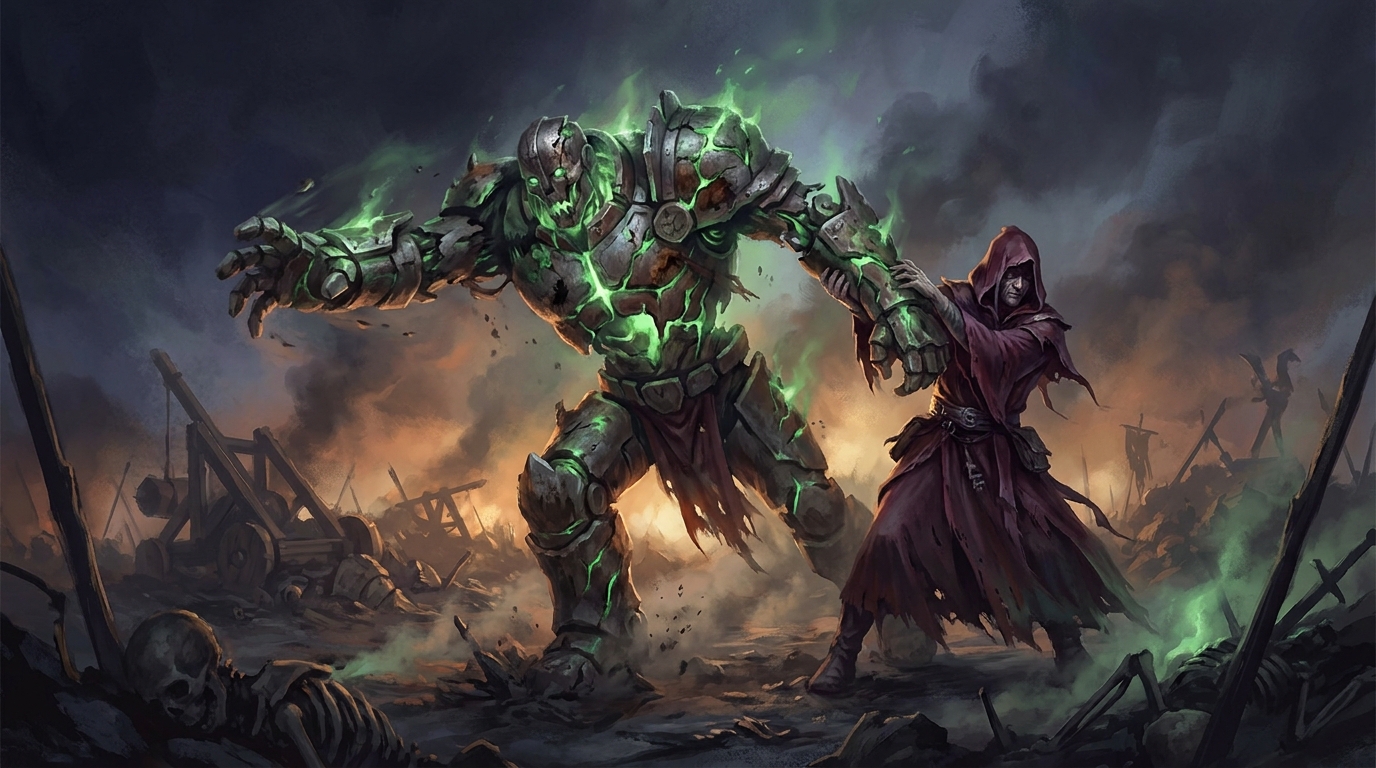
What unearth actually does
Unearth is an activated ability that works from your graveyard. The current reminder text, taken verbatim from Dregscape Zombie, reads:
Unearth {B} ({B}: Return this card from your graveyard to the battlefield. It gains haste. Exile it at the beginning of the next end step or if it would leave the battlefield. Unearth only as a sorcery.)
Four separate things are happening in that one line, and each of them matters:
- It returns from the graveyard to the battlefield. Not to your hand. Not to the top of your library. Straight onto the table, untapped.
- It gains haste. That is the whole point — an unearthed creature can attack the turn it arrives. If you want the full picture of what haste does and does not turn on, we broke that down in our guide to haste in MTG.
- It is exiled at the beginning of the next end step. One turn of work, then gone.
- It is exiled if it would leave the battlefield. This is the half people forget, and it is where most unearth “combos” quietly fail.
The sorcery-speed restriction rounds it out: you can only unearth during your own main phase with an empty stack. There is no instant-speed unearth ambush.
Unearth is not casting — and that decides games
This is the single most important thing to understand about the mechanic, and it is the question people search for most. Wizards addressed it in the very first batch of unearth rulings, back in October 2008:
Activating a creature card’s unearth ability isn’t the same as casting the creature card. The unearth ability is put on the stack, but the creature card is not.
The practical consequences are enormous:
- Counterspell cannot touch it. Neither can Essence Scatter, Negate, or anything else that counters spells. There is no spell to counter — only an ability.
- “Creatures can’t be cast” effects do nothing. An opponent who has locked down the stack has not locked down your graveyard.
- Cast triggers do not fire. Your own “whenever you cast a creature spell” payoffs stay silent. This cuts both ways and catches new players out constantly.
- Stifle and Voidslime can stop it, because those answer activated and triggered abilities. So can Disallow.
- Enters-the-battlefield triggers absolutely do fire. The creature is entering the battlefield, and nothing about unearth changes that. This is where the value lives.
So unearth threads a needle: it slips past the most common interaction in Magic — countering spells — while keeping the most valuable trigger type. That combination is why it has stayed a constructed-playable mechanic for eighteen years.
The exile clause has two halves, and the second one is a trap
Almost every unearth explainer stops at “it gets exiled at end of turn.” The full clause is “Exile it at the beginning of the next end step or if it would leave the battlefield.” Those are two different effects with two different rules:
- The end-step exile is a delayed triggered ability. It uses the stack. It can be countered.
- The leaves-the-battlefield exile is a replacement effect. It does not use the stack and cannot be countered.
That distinction produces the single most common mistake in unearth decks: death triggers never fire. If you sacrifice an unearthed creature to Viscera Seer, the creature is exiled instead of dying. The sacrifice still happens — you paid the cost, and you still Scry 1 — but the creature never reaches the graveyard, so nothing that reads “whenever a creature you control dies” ever sees it. An aristocrats shell built around unearthed bodies is a shell that never gets paid.
Wizards spelled out the interaction between the two halves as well. If you Stifle the end-step trigger, the creature stays on the battlefield permanently — but the replacement effect is still attached to it, so the moment it would ever leave the battlefield, it is exiled instead.
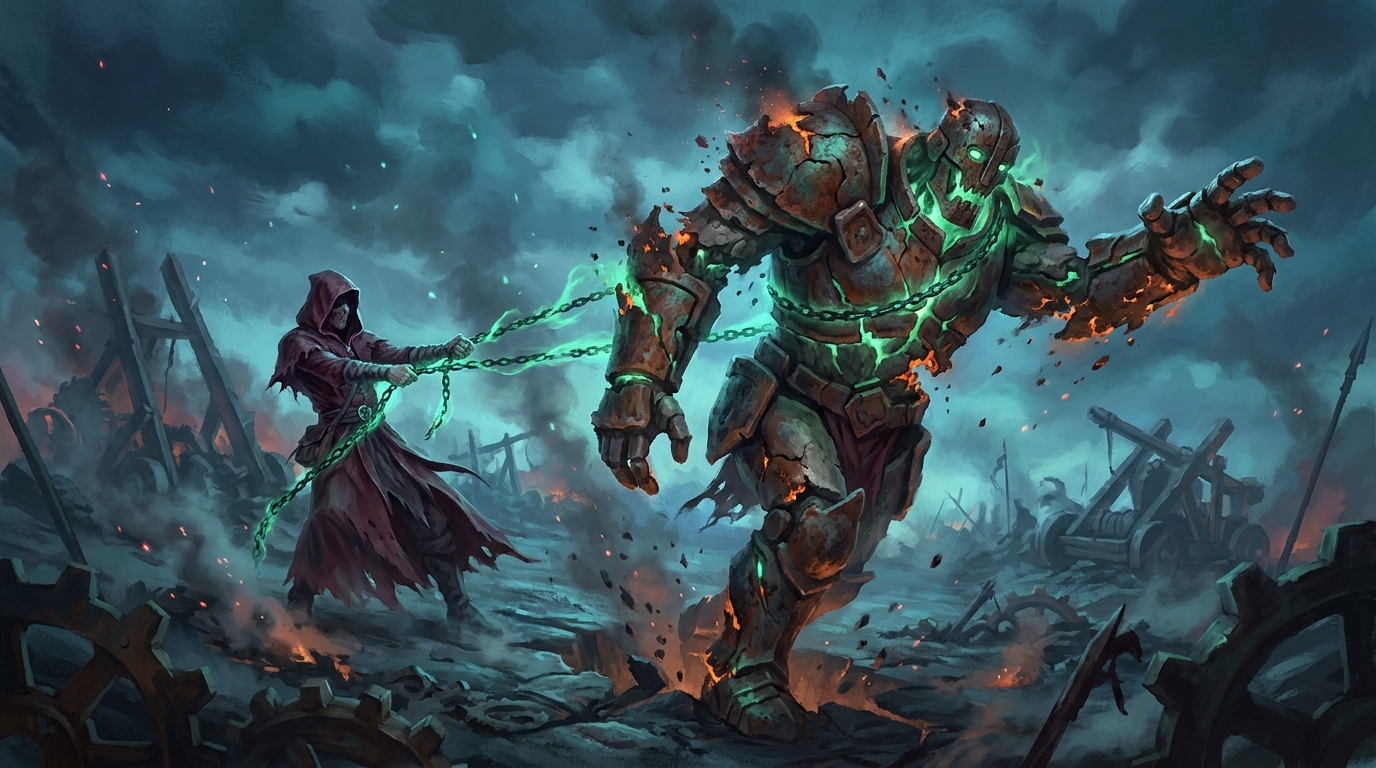
The blink loophole: flicker effects genuinely work
Here is the counterintuitive part, and it is worth reading twice, because most players guess it backwards.
You would assume blinking an unearthed creature kills it — it would leave the battlefield, so it is exiled instead, and it never comes back. That is not what the rules say. The official ruling is explicit:
If a creature returned to the battlefield with unearth would leave the battlefield for any reason, it’s exiled instead — unless the spell or ability that’s causing the creature to leave the battlefield is actually trying to exile it! In that case, it succeeds at exiling it. If it later returns the creature card to the battlefield (as Oblivion Ring or Flickerwisp might, for example), the creature card will return to the battlefield as a new object with no relation to its previous existence. The unearth effect will no longer apply to it.
Read that ending again: the unearth effect will no longer apply to it. A blink effect exiles the creature, which the replacement effect permits, and then returns it as a brand-new object with no exile clause and no end-step timer attached. It stays on the battlefield forever, and it triggers its enters-the-battlefield ability a second time on the way in.
Blink effects that exile-and-return are therefore the cleanest way to keep an unearthed body. In Grixis colours that means Ghostly Flicker and Deadeye Navigator. In white it means Ephemerate, Cloudshift and Restoration Angel. Any of them converts a one-turn rental into a permanent creature plus a free ETB trigger.
The distinction that makes it work is a narrow one: a bounce effect that returns the creature to your hand is not trying to exile it, so the replacement effect fires and the card is exiled with nothing to bring it back. Blink saves an unearthed creature. Bounce destroys it.
The rule doing the work here — a permanent that leaves and returns is a brand-new object — is the same one that powers a much newer mechanic. Exhaust abilities (Aetherdrift, 2025) can be activated only once, and the official ruling on the exhaust cards says a permanent that leaves the battlefield and comes back gets its exhaust ability again. Reanimation is a zone change too, so a Sedris deck that unearths an exhaust creature is not just getting a hasty body for a turn: Afterburner Expert, which returns itself from the graveyard whenever you activate an exhaust ability, is the card the two mechanics were built to share.
Sundial of the Infinite: how to keep the body permanently
The other way to keep an unearthed creature is to remove the end-step trigger before it resolves. Sundial of the Infinite reads “{1}, {T}: End the turn,” and ending the turn exiles every spell and ability waiting on the stack. Activate it in response to the unearth trigger and the trigger simply ceases to exist. The creature stays.
The same logic applies to Stifle, Voidslime and Disallow, which counter the delayed trigger outright. As Wizards noted in the 2008 rulings, once that trigger is countered it does not come back and will not trigger again.
All of these leave the creature with the leaves-the-battlefield replacement still attached, so it can never afterwards be bounced, or sacrificed for a death trigger. It is a permanent creature that can only ever exit the game via exile. For most decks that is a trade worth making.
Every unearth card in Magic (all 56)
Sorted by mana value. Prices are the cheapest available paper printing of each card at the time of writing, so this is what it actually costs to obtain a copy — not the price of the flashiest version.
| Card | Cost | Unearth | P/T | First printed | Cheapest copy |
|---|---|---|---|---|---|
| Combat Courier | {1} | {U} | 1/1 | The Brothers’ War | $0.08 |
| Mishra’s Research Desk | {1} | {1}{R} | — | The Brothers’ War | $0.28 |
| Yotian Frontliner | {1} | {W} | 1/1 | The Brothers’ War | $0.21 |
| Ashnod’s Harvester | {2} | {1}{B} | 3/1 | The Brothers’ War | $0.19 |
| Chronomancer | {1}{B} | {2}{B} | 1/1 | Warhammer 40,000 Commander | $1.84 |
| Dregscape Sliver | {1}{B} | {2} | 2/2 | Modern Horizons | $0.31 |
| Dregscape Zombie | {1}{B} | {B} | 2/1 | Shards of Alara | $0.12 |
| Hellspark Elemental | {1}{R} | {1}{R} | 3/1 | Conflux | $0.12 |
| Mask of the Jadecrafter | {2} | {2}{G} | — | The Brothers’ War | $0.07 |
| Priest of Fell Rites | {W}{B} | {3}{W}{B} | 2/2 | Modern Horizons 2 | $0.19 |
| Rotting Rats | {1}{B} | {1}{B} | 1/1 | Conflux | $0.87 |
| Scrapwork Mutt | {2} | {1}{R} | 2/1 | The Brothers’ War | $0.20 |
| Triarch Praetorian | {1}{B} | {4}{B} | 2/1 | Warhammer 40,000 Commander | $1.77 |
| Anathemancer | {1}{B}{R} | {5}{B}{R} | 2/2 | Alara Reborn | $2.23 |
| Brackwater Elemental | {2}{U} | {2}{U} | 4/4 | Conflux | $0.09 |
| Hell’s Thunder | {1}{R}{R} | {4}{R} | 4/4 | Shards of Alara | $0.26 |
| Kathari Bomber | {1}{B}{R} | {3}{B}{R} | 2/2 | Alara Reborn | $0.11 |
| Kathari Screecher | {2}{U} | {2}{U} | 2/2 | Shards of Alara | $0.06 |
| Molten Gatekeeper | {2}{R} | {R} | 2/3 | Modern Horizons 3 | $0.26 |
| Phyrexian Dragon Engine | {3} | {3}{R}{R} | 2/2 | The Brothers’ War | $0.92 |
| Reconstructed Thopter | {3} | {2} | 2/1 | The Brothers’ War | $0.15 |
| Sedraxis Specter | {U}{B}{R} | {1}{B} | 3/2 | Shards of Alara | $0.09 |
| Shambling Remains | {1}{B}{R} | {B}{R} | 4/3 | Conflux | $0.07 |
| Simian Simulacrum | {3} | {2}{G}{G} | 2/1 | The Brothers’ War | $0.34 |
| Skorpekh Lord | {2}{B} | {2}{B} | 3/2 | Warhammer 40,000 Commander | $2.95 |
| Vithian Stinger | {2}{R} | {1}{R} | 0/1 | Shards of Alara | $0.07 |
| Canoptek Tomb Sentinel | {4} | {7} | 4/3 | Warhammer 40,000 Commander | $2.09 |
| Fatestitcher | {3}{U} | {U} | 1/2 | Shards of Alara | $0.52 |
| Fire-Field Ogre | {1}{U}{B}{R} | {U}{B}{R} | 4/2 | Shards of Alara | $0.10 |
| Lokhust Heavy Destroyer | {1}{B}{B}{B} | {5}{B}{B}{B} | 3/2 | Warhammer 40,000 Commander | $0.42 |
| Scrapwork Cohort | {4} | {2}{W} | 3/1 | The Brothers’ War | $0.08 |
| Scrapwork Rager | {4} | {3}{B} | 2/2 | The Brothers’ War | $0.04 |
| Viscera Dragger | {3}{B} | {1}{B} | 3/3 | Shards of Alara | $0.11 |
| Corpse Connoisseur | {4}{B} | {3}{B} | 3/3 | Shards of Alara | $0.25 |
| Etherium Abomination | {3}{U}{B} | {1}{U}{B} | 4/3 | Alara Reborn | $0.11 |
| Mishra’s Juggernaut | {5} | {5}{R} | 5/3 | The Brothers’ War | $0.05 |
| Perennial Behemoth | {5} | {G}{G} | 2/7 | The Brothers’ War | $0.60 |
| Platoon Dispenser | {5} | {2}{W}{W} | 4/6 | The Brothers’ War | $0.62 |
| Royal Warden | {3}{B}{B} | {3}{B} | 3/2 | Warhammer 40,000 Commander | $0.66 |
| Scourge Devil | {4}{R} | {2}{R} | 3/3 | Shards of Alara | $0.03 |
| Tocasia’s Onulet | {5} | {3}{W} | 4/4 | The Brothers’ War | $0.07 |
| Artificer’s Dragon | {6} | {3}{R}{R} | 4/4 | The Brothers’ War | $0.26 |
| Extractor Demon | {4}{B}{B} | {2}{B} | 5/5 | Conflux | $0.24 |
| First-Sphere Gargantua | {4}{B}{B} | {2}{B} | 5/4 | Modern Horizons | $0.15 |
| Grixis Slavedriver | {5}{B} | {3}{B} | 4/4 | Conflux | $0.05 |
| Hexmark Destroyer | {4}{B}{B} | {4}{B}{B} | 6/6 | Warhammer 40,000 Commander | $0.40 |
| Tomb Blade | {4}{B}{B} | {6}{B}{B} | 5/4 | Warhammer 40,000 Commander | $0.35 |
| Undead Leotau | {5}{B} | {2}{B} | 3/4 | Shards of Alara | $0.08 |
| Archfiend of Sorrows | {5}{B}{B} | {3}{B}{B} | 4/5 | Modern Horizons 2 | $0.08 |
| Heavyweight Demolisher | {7} | {6}{R}{R} | 8/6 | The Brothers’ War | $0.09 |
| Terisian Mindbreaker | {7} | {1}{U}{U}{U} | 6/4 | The Brothers’ War | $1.63 |
| Terror Ballista | {7} | {3}{B}{B} | 5/3 | The Brothers’ War | $0.27 |
| Tri-Sentinel, Act of Vengeance | {7} | {7} | 7/7 | Marvel Super Heroes Commander | $0.41 |
| Cityscape Leveler | {8} | {8} | 8/8 | The Brothers’ War | $6.89 |
| Kederekt Leviathan | {6}{U}{U} | {6}{U} | 5/5 | Shards of Alara | $0.47 |
| Salvation Colossus | {6}{W}{W} | Pay eight {E} | 9/9 | Modern Horizons 3 Commander | $0.33 |
Two rows in that list are not creatures at all. Mishra’s Research Desk and Mask of the Jadecrafter are plain artifacts from The Brothers’ War with unearth stapled on, and their reminder text quietly drops the words “It gains haste” — because an artifact that is not a creature has nothing to give haste to. They are the only two unearth cards in Magic that do not put a body on the battlefield.
Where unearth came from, and where it went
Unearth is the signature mechanic of Grixis, the black-red-blue shard of Alara, and its printing history has a ten-year hole in the middle of it.
| Set | Released | New unearth cards |
|---|---|---|
| Shards of Alara | 3 Oct 2008 | 12 |
| Conflux | 6 Feb 2009 | 6 |
| Alara Reborn | 30 Apr 2009 | 3 |
| Modern Horizons | 14 Jun 2019 | 2 |
| Modern Horizons 2 | 18 Jun 2021 | 2 |
| Warhammer 40,000 Commander | 7 Oct 2022 | 8 |
| The Brothers’ War | 18 Nov 2022 | 20 |
| Modern Horizons 3 | 14 Jun 2024 | 1 |
| Modern Horizons 3 Commander | 14 Jun 2024 | 1 |
| Marvel Super Heroes Commander | 26 Jun 2026 | 1 |
| Total | 56 |
The Alara block printed 21 unearth cards in seven months — twelve in Shards of Alara on 3 October 2008, six in Conflux, three in Alara Reborn — and then the mechanic disappeared completely for ten years and six weeks, until Modern Horizons brought back two cards in June 2019.
What happened next reframed the whole mechanic. In late 2022, two sets six weeks apart printed 28 unearth cards between them: eight in the Warhammer 40,000 Commander decks, and twenty in The Brothers’ War. That single set holds more unearth cards than the entire Alara block that invented the mechanic, and almost all of them are artifact creatures. Unearth started life as a black-red graveyard mechanic and came back as an artifact mechanic.
Which formats can actually play unearth
| Format | Legal unearth cards | Share of the 56 |
|---|---|---|
| Commander | 56 | 100% |
| Legacy | 56 | 100% |
| Vintage | 56 | 100% |
| Modern | 46 | 82% |
| Pioneer | 20 | 36% |
| Pauper | 19 | 34% |
| Standard | 0 | 0% |
Two numbers in that table are worth pulling out.
Pioneer legality is 20 cards, and all twenty are from The Brothers’ War. Not one Alara-block, Modern Horizons or Warhammer card is Pioneer-legal, because none of those sets is in Pioneer’s card pool. Pioneer’s entire relationship with unearth is one set.
Zero unearth cards are Standard-legal. The Brothers’ War has rotated out, and nothing since has reprinted the keyword into a Standard set. If you are building in Standard, unearth is not available to you at all right now.
The ten paper cards that are not Modern-legal break down just as cleanly: eight are the Warhammer 40,000 Commander cards, and the other two are Salvation Colossus from Modern Horizons 3 Commander and Tri-Sentinel, Act of Vengeance from the 2026 Marvel Super Heroes Commander decks. Commander-product exclusives, every one of them.
Colour identity: unearth is still a black mechanic
| Colour identity | Cards | Share |
|---|---|---|
| Mono-black | 19 | 34% |
| Mono-red | 11 | 20% |
| Mono-blue | 6 | 11% |
| Mono-white | 5 | 9% |
| Black-red | 4 | 7% |
| Colourless | 4 | 7% |
| Mono-green | 3 | 5% |
| Grixis (black-red-blue) | 2 | 4% |
| Black-blue | 1 | 2% |
| Black-white | 1 | 2% |
| Total | 56 | 100% |
Nineteen of the 56 are mono-black and another eight have black somewhere in their identity, so black touches 27 of them — just under half. Red is a distant second at eleven. The four colourless cards are all artifact creatures, and the entries in white and green only exist because The Brothers’ War gave colourless artifact creatures coloured unearth costs.
What unearth costs — and why it is usually not a discount
This is where the received wisdom about unearth falls apart. The mechanic is described everywhere as a cheap way to rebuy a creature, and for a handful of cards that is true. For most of them it is not.
| Unearth cost | Cards | Priciest creature at that cost |
|---|---|---|
| 1 mana | 5 | Fatestitcher ({U}) |
| 2 mana | 12 | Perennial Behemoth ({G}{G}) |
| 3 mana | 12 | Extractor Demon ({2}{B}) |
| 4 mana | 8 | Terisian Mindbreaker ({1}{U}{U}{U}) |
| 5 mana | 8 | Archfiend of Sorrows ({3}{B}{B}) |
| 6 mana | 2 | Hexmark Destroyer ({4}{B}{B}) |
| 7 mana | 4 | Kederekt Leviathan ({6}{U}) |
| 8 mana | 4 | Cityscape Leveler ({8}) |
| Eight energy counters | 1 | Salvation Colossus |
| Total | 56 |
The costs cluster in the middle, not at the bottom: 24 of the 56 unearth for two or three mana, but 18 of them cost five or more. And the pips matter. Only five of the 56 unearth for pure generic mana — Dregscape Sliver, Reconstructed Thopter, Canoptek Tomb Sentinel, Cityscape Leveler and Tri-Sentinel. The other 50 all demand at least one coloured pip (32 want one pip, 15 want two, and three want three), and one is paid in energy counters.
Now compare each card’s unearth cost against what it cost to cast in the first place:
| Unearth cost vs. casting cost | Cards | Share |
|---|---|---|
| Cheaper to unearth | 26 | 46% |
| Exactly the same | 14 | 25% |
| More expensive to unearth | 15 | 27% |
| Paid in energy, not mana | 1 | 2% |
| Total | 56 | 100% |
Unearth is cheaper than casting on only 26 of 56 cards — fewer than half. Fourteen charge exactly the same price, and fifteen charge more to rebuy the creature than it cost to play the first time. Wizards has consistently priced unearth as a second use, not a bargain: you are paying for haste and for dodging counterspells, and often paying a premium for both.
The six cards where unearth is a real bargain
Only six cards save three mana or more:
| Card | Cast for | Unearth for | Mana saved | Cheapest copy |
|---|---|---|---|---|
| Fatestitcher | {3}{U} (4) | {U} (1) | 3 | $0.52 |
| Perennial Behemoth | {5} (5) | {G}{G} (2) | 3 | $0.60 |
| Extractor Demon | {4}{B}{B} (6) | {2}{B} (3) | 3 | $0.24 |
| First-Sphere Gargantua | {4}{B}{B} (6) | {2}{B} (3) | 3 | $0.15 |
| Undead Leotau | {5}{B} (6) | {2}{B} (3) | 3 | $0.08 |
| Terisian Mindbreaker | {7} (7) | {1}{U}{U}{U} (4) | 3 | $1.63 |
Terisian Mindbreaker is the pick of them. It is a 6/4 that costs {7} to cast and {1}{U}{U}{U} to unearth — a three-mana saving — and whenever it attacks, the defending player mills half their library, rounded up. Discarding it early and unearthing it for four mana is not a fringe line; it is the card’s intended mode, and in Commander it is a two-attack clock on somebody’s library.
Note also what is not on that list: five cards unearth for a single mana — Fatestitcher {U}, Molten Gatekeeper {R}, Dregscape Zombie {B}, Combat Courier {U} and Yotian Frontliner {W} — but four of the five are cheap creatures to begin with, so the saving is marginal. Fatestitcher is the exception: a four-mana creature that comes back for a single blue.
The fifteen cards where unearth costs you extra
| Card | Cast for | Unearth for | Extra mana | Cheapest copy |
|---|---|---|---|---|
| Anathemancer | {1}{B}{R} (3) | {5}{B}{R} (7) | +4 | $2.23 |
| Lokhust Heavy Destroyer | {1}{B}{B}{B} (4) | {5}{B}{B}{B} (8) | +4 | $0.42 |
| Canoptek Tomb Sentinel | {4} (4) | {7} (7) | +3 | $2.09 |
| Priest of Fell Rites | {W}{B} (2) | {3}{W}{B} (5) | +3 | $0.19 |
| Triarch Praetorian | {1}{B} (2) | {4}{B} (5) | +3 | $1.77 |
| Hell’s Thunder | {1}{R}{R} (3) | {4}{R} (5) | +2 | $0.26 |
| Kathari Bomber | {1}{B}{R} (3) | {3}{B}{R} (5) | +2 | $0.11 |
| Phyrexian Dragon Engine | {3} (3) | {3}{R}{R} (5) | +2 | $0.92 |
| Tomb Blade | {4}{B}{B} (6) | {6}{B}{B} (8) | +2 | $0.35 |
| Chronomancer | {1}{B} (2) | {2}{B} (3) | +1 | $1.84 |
| Heavyweight Demolisher | {7} (7) | {6}{R}{R} (8) | +1 | $0.09 |
| Mask of the Jadecrafter | {2} (2) | {2}{G} (3) | +1 | $0.07 |
| Mishra’s Juggernaut | {5} (5) | {5}{R} (6) | +1 | $0.05 |
| Mishra’s Research Desk | {1} (1) | {1}{R} (2) | +1 | $0.28 |
| Simian Simulacrum | {3} (3) | {2}{G}{G} (4) | +1 | $0.34 |
Lokhust Heavy Destroyer is the worst offender in the game: a four-mana creature that costs {5}{B}{B}{B} — eight mana — to bring back. Anathemancer and Triarch Praetorian more than double their own cost. In every case you are buying a specific effect rather than efficiency. Anathemancer’s unearth is a second helping of damage to one chosen player equal to their nonbasic-land count, which in Commander is frequently lethal on its own. Lokhust Heavy Destroyer’s is a second board-wide edict. And Triarch Praetorian is the cleanest of the three: its ability reads “when this creature enters from a graveyard, you draw two cards and you lose 2 life,” so the five-mana unearth is the only way to get the trigger at all.
Unearth in Pauper
Nineteen of the 56 are commons somewhere, which makes them Pauper-legal. This is the cheapest way into the mechanic: every card below is a common, and most cost under a quarter.
| Card | Cost | Unearth | P/T | Cheapest copy |
|---|---|---|---|---|
| Combat Courier | {1} | {U} | 1/1 | $0.08 |
| Dregscape Zombie | {1}{B} | {B} | 2/1 | $0.12 |
| Rotting Rats | {1}{B} | {1}{B} | 1/1 | $0.87 |
| Scrapwork Mutt | {2} | {1}{R} | 2/1 | $0.20 |
| Brackwater Elemental | {2}{U} | {2}{U} | 4/4 | $0.09 |
| Kathari Bomber | {1}{B}{R} | {3}{B}{R} | 2/2 | $0.11 |
| Kathari Screecher | {2}{U} | {2}{U} | 2/2 | $0.06 |
| Molten Gatekeeper | {2}{R} | {R} | 2/3 | $0.26 |
| Vithian Stinger | {2}{R} | {1}{R} | 0/1 | $0.07 |
| Scrapwork Cohort | {4} | {2}{W} | 3/1 | $0.08 |
| Scrapwork Rager | {4} | {3}{B} | 2/2 | $0.04 |
| Viscera Dragger | {3}{B} | {1}{B} | 3/3 | $0.11 |
| Etherium Abomination | {3}{U}{B} | {1}{U}{B} | 4/3 | $0.11 |
| Mishra’s Juggernaut | {5} | {5}{R} | 5/3 | $0.05 |
| Scourge Devil | {4}{R} | {2}{R} | 3/3 | $0.03 |
| Tocasia’s Onulet | {5} | {3}{W} | 4/4 | $0.07 |
| First-Sphere Gargantua | {4}{B}{B} | {2}{B} | 5/4 | $0.15 |
| Grixis Slavedriver | {5}{B} | {3}{B} | 4/4 | $0.05 |
| Undead Leotau | {5}{B} | {2}{B} | 3/4 | $0.08 |
The only seven unearth cards that cost more than a dollar
Here is the economics of the whole mechanic in one table. Forty-nine of the 56 unearth cards cost under a dollar and total $11.90 combined. The remaining seven total $19.40 — more than the other forty-nine put together.
| Card | Cheapest copy | First printed | Modern legal? |
|---|---|---|---|
| Cityscape Leveler | $6.89 | The Brothers’ War | Yes |
| Skorpekh Lord | $2.95 | Warhammer 40,000 Commander | No |
| Anathemancer | $2.23 | Alara Reborn | Yes |
| Canoptek Tomb Sentinel | $2.09 | Warhammer 40,000 Commander | No |
| Chronomancer | $1.84 | Warhammer 40,000 Commander | No |
| Triarch Praetorian | $1.77 | Warhammer 40,000 Commander | No |
| Terisian Mindbreaker | $1.63 | The Brothers’ War | Yes |
Three of those seven are Warhammer 40,000 Commander cards, and they are expensive because those decks had a limited print run, not because the cards are powerful. Cityscape Leveler is the only one on the list carrying a genuine constructed price tag: an 8/8 trampler that destroys a nonland permanent both when you cast it and every time it attacks, and unearths for {8}.
The four cards that hand unearth out
Nine cards in Magic reference unearth without having it themselves. Three of those are Arena-only Alchemy cards, and one — Magnus the Red — is a false positive whose ability is merely named “Unearthly Power.” That leaves five real paper cards, four of which grant the keyword to things in your graveyard:
| Card | Cost | What it grants unearth to | Unearth cost granted | Cheapest copy |
|---|---|---|---|---|
| Sedris, the Traitor King | {3}{U}{B}{R} | Every creature card in your graveyard | {2}{B} | $0.96 |
| Mishra, Tamer of Mak Fawa | {3}{B}{R} | Every artifact card in your graveyard | {1}{B}{R} | $0.29 |
| Solemn Doomguide | {3}{B}{B} | Clerics, Rogues, Warriors and Wizards in your graveyard | {1}{B} | $0.21 |
| Ghost Ark | {4} | Artifact creatures in your graveyard, while crewed | {3} | $0.41 |
The fifth paper card is Meticulous Excavation, which does not grant unearth but explicitly checks for it: for {2}{W} it bounces a permanent you control, and if that permanent has unearth, it exiles and returns it to hand instead — a rare piece of design that acknowledges the replacement effect head-on.
Sedris, the Traitor King is the one that matters. He debuted in Shards of Alara on 3 October 2008 — the exact release date of the mechanic itself — and he hands unearth {2}{B} to every creature card in your graveyard, whether or not it has ever seen the keyword. He is the reason unearth has a Commander deck at all.
The card called Unearth does not have unearth
There is a Magic card named Unearth. It is a {B} sorcery that returns a creature with mana value 3 or less from your graveyard to the battlefield, and it has Cycling {2}. It does not have the unearth keyword, and it never has.
It also predates the mechanic by a wide margin. Unearth the card was printed in Urza’s Legacy on 15 February 1999. Unearth the mechanic arrived in Shards of Alara on 3 October 2008 — nine years and seven months later. The card has since appeared in eight paper sets, is a Modern and Legacy staple, and the cheapest copy runs about $0.44.
If you searched for “unearth mtg” hoping for the card rather than the keyword: that is the card, it is a sorcery, and what it does has nothing mechanically to do with anything else on this page.
The unearth Commander deck: Sedris, the Traitor King
Sedris turns your graveyard into a second hand. Every creature card down there has unearth {2}{B}, so the plan is straightforward: fill the yard with expensive creatures that have brutal enters-the-battlefield triggers, then buy them back three mana at a time for one hasty attack and one trigger apiece.
The deck below is 100 cards, Grixis, singleton-legal, and every name was validated against Scryfall — colour identity, Commander legality and slot count all checked. It runs 37 creatures, 36 lands, and both ways of keeping an unearthed body permanently: Ghostly Flicker and Deadeye Navigator for the blink loophole, and Sundial of the Infinite for the end-step trick.
Total cost on cheapest paper printings is about $154, but that number is lopsided. Ten cards — Sheoldred, Altar of Dementia, Entomb, Ashnod’s Altar, Sundial, Sidisi, Reanimate, Cityscape Leveler, Animate Dead and Windfall — account for $112.66 of it. The other 74 cards cost $41.86 combined, and 60 of them are under a dollar each. Cut the ten and the deck still works; it just reanimates a little slower.
Sedris, the Traitor King - Unearth Commander
100 cards — one click loads the full list into a TCGplayer cart so you can check real prices and grab the whole deck at once.
Buy this deck on TCGplayerAffiliate link — buying through it supports KrakenTheMeta at no extra cost to you.How the deck actually plays
Turns one through three are about filling the graveyard, not developing the board. Stitcher’s Supplier, Entomb, Buried Alive, Faithless Looting and Frantic Search all put creatures where you want them. Undercity Informer turns a spare mana and a spare body into a mill engine.
From turn five, Sedris comes down and the graveyard starts paying rent. Sepulchral Primordial is the best target in the deck — unearth it for {2}{B} and it puts a creature from every opponent’s graveyard onto the battlefield under your control, and those stolen creatures do not carry Sedris’s exile clause, so they stay when the Primordial leaves. Ravenous Chupacabra is a three-mana Murder every time you can afford it. Massacre Wurm unearths for the same three mana and gives every creature your opponents control -2/-2, which on a wide board is a one-sided wrath.
The finishing turn is usually Sedris plus five or six mana: unearth two large creatures, attack with hasty threats nobody blocked for, and let both ETB triggers resolve. If you have Ghostly Flicker up, one of those creatures never leaves.
Want a starting point that is not this deck? Our public deck gallery has thousands of community Commander lists you can copy and modify, and the KrakenTheMeta AI deck builder will build a Sedris list around whatever cards you already own.
Worth contrasting with the one recursion keyword that is not a graveyard mechanic at all: rebound exiles the spell straight off the stack, so the card never reaches your graveyard on the first cast. Every mechanic below wants the card in the yard. Rebound takes it out.
Unearth versus every other graveyard mechanic
Magic has a lot of ways to use a card from your graveyard, and they differ in ways that matter at the table.
| Mechanic | Is it casting? | Where does the card end up? | Speed | Haste? |
|---|---|---|---|---|
| Unearth | No — activated ability | Exiled at end of turn | Sorcery only | Yes |
| Flashback | Yes — you cast the spell | Exiled on resolution | The card’s own type | n/a |
| Escape | Yes — you cast the spell | Stays on the battlefield | The card’s own type | No |
| Disturb | Yes — you cast the back face | Exiled if it would leave | The card’s own type | No |
| Embalm / Eternalize | No — activated ability | Card is exiled, you get a token | Sorcery only | No |
| Dredge | No — replaces a draw | Returns to your hand | Whenever you would draw | n/a |
The two closest relatives are embalm/eternalize — also activated, also sorcery-speed, also one-way — and dredge, which goes the other direction entirely by putting the card back in your hand. If you want the full mechanics on the alternative-cost side of the family, we covered flashback in detail as well.
Frequently asked questions
Is unearth casting a spell in MTG?
No. Unearth is an activated ability, not a spell. The ability goes on the stack; the creature card does not. Counterspell, Essence Scatter and any other “counter target spell” effect cannot stop it. Stifle, Voidslime and Disallow can, because those answer abilities.
What happens to a creature after you unearth it?
It is exiled at the beginning of the next end step — your own end step, if you unearthed it on your turn. It is also exiled immediately if it would leave the battlefield for any other reason, including being bounced, sacrificed or destroyed.
Can you unearth at instant speed?
No. Every unearth ability carries “Unearth only as a sorcery,” which means your main phase, your turn, empty stack. There are no exceptions among the 56 printed cards.
Does unearth trigger enters-the-battlefield abilities?
Yes. The creature genuinely enters the battlefield, so every ETB trigger on it fires normally. This is the primary reason to build around the mechanic — a creature with a strong ETB effectively becomes a repeatable sorcery.
Does unearth trigger “when this creature dies”?
No, and this is the most common mistake in unearth decks. The creature is exiled instead of dying, so death triggers never fire. You can still sacrifice it to pay a cost — Viscera Seer still scries, Ashnod’s Altar still makes mana — but nothing that reads “whenever a creature dies” will see it.
Can you blink or flicker an unearthed creature to keep it?
Yes, and this is the best trick in the mechanic. Per the official ruling, an effect that is actively trying to exile the creature succeeds, and when that effect returns the card to the battlefield it comes back as a new object with no unearth clause attached. Ghostly Flicker, Deadeye Navigator, Ephemerate and Restoration Angel all convert a one-turn rental into a permanent creature and hand you a second ETB trigger.
Does Sundial of the Infinite keep an unearthed creature?
Yes. The end-step exile is a delayed triggered ability, and ending the turn with Sundial exiles everything waiting on the stack. Respond to the trigger with Sundial and the creature stays on the battlefield. It keeps the leaves-the-battlefield replacement effect, so it can never afterwards be bounced or sacrificed for value.
How many unearth cards are there in MTG?
58 cards carry the keyword. Two of those — Gixian Recycler and Patchplate Resolute — are Alchemy cards that exist only on MTG Arena, so 56 unearth cards have been printed on paper. All 56 are legal in Commander, Legacy and Vintage.
Is unearth always cheaper than casting the creature?
No — and this surprises most players. Unearth costs less than the card’s own mana value on only 26 of the 56 cards. Fourteen cost exactly the same, and fifteen cost more. The worst is Lokhust Heavy Destroyer, a four-mana creature that unearths for eight.
Is unearth Standard legal?
No. Zero unearth cards are currently Standard-legal. The Brothers’ War, which printed twenty of them, has rotated out, and no set since has reprinted the keyword into Standard.
Which set has the most unearth cards?
The Brothers’ War, with 20 — more than Shards of Alara (12), Conflux (6) and Alara Reborn (3) combined, despite those three sets being the ones that invented the mechanic.
Is the card “Unearth” the same as the unearth mechanic?
No. Unearth is a {B} sorcery from Urza’s Legacy (1999) that reanimates a creature with mana value 3 or less. It has Cycling {2} and does not have the unearth keyword. It predates the mechanic by more than nine years.
What is the best unearth commander?
Sedris, the Traitor King. He gives every creature card in your graveyard unearth {2}{B}, which turns any big creature you have milled or discarded into a hasty attacker with a live ETB trigger. Mishra, Tamer of Mak Fawa is the artifact-focused alternative in Rakdos.
How much does it cost to buy every unearth card?
$31.30 for all 56, on cheapest paper printings. Forty-nine of them are under a dollar and total $11.90 between them; the seven that cost more than a dollar account for the other $19.40.
Build your next deck with AI
KrakenTheMeta’s AI deck builder researches the current meta and writes you a complete, format-legal decklist in about a minute — free to try.
Build a Deck with AIor browse community decks

One Comment
Comments are closed.